Professional DMX Control Integration and Programming Flexibility
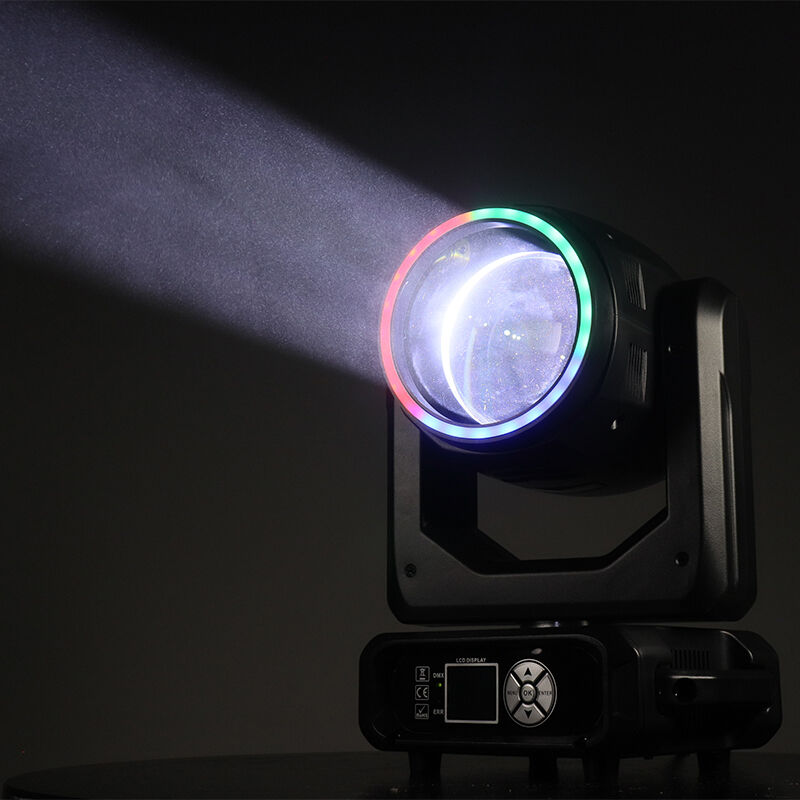
The professional-grade DMX control integration featured in moving head stage lights represents a crucial advantage that elevates these fixtures to essential status in modern lighting systems. DMX512 protocol compatibility ensures seamless integration with industry-standard lighting consoles from major manufacturers, providing lighting designers with familiar control interfaces and extensive programming capabilities. These fixtures typically utilize multiple DMX channels ranging from 16 to 40 or more channels per fixture, providing independent control over every function including pan, tilt, color mixing, gobo selection, prism effects, focus, and special features. The comprehensive channel mapping allows for precise control over movement speeds, color fade times, and effect intensities, enabling lighting designers to create sophisticated automated sequences that respond to musical cues or theatrical timing requirements. Advanced moving head stage lights feature onboard processors that can store complex movement and color sequences in internal memory banks, reducing DMX traffic and enabling standalone operation when required. The fixtures often include master-slave capabilities that allow multiple units to operate in synchronized patterns without requiring individual console control, simplifying setup procedures for smaller installations. Many modern moving head stage lights incorporate wireless DMX receivers, eliminating cable runs and providing installation flexibility particularly valuable in temporary setups or venues where cable routing presents challenges. The programming flexibility extends to customizable movement curves and acceleration profiles that allow lighting designers to match fixture behavior to specific creative requirements, whether smooth, flowing movements for ballads or sharp, staccato movements for energetic musical passages. Professional moving head stage lights often feature extensive diagnostic capabilities accessible through DMX control, including lamp hour tracking, temperature monitoring, and error reporting that facilitate preventive maintenance and troubleshooting. The control systems frequently include multiple operating modes including sound-activated programs for installations without DMX control, built-in test sequences for setup verification, and automated programs that provide instant light shows for emergency backup situations. This comprehensive control integration ensures that moving head stage lights can adapt to virtually any professional lighting application while providing the reliability and functionality demanded by touring productions and permanent installations.