

Stage lighting has evolved dramatically over the past few decades, with beam moving lights revolutionizing how performers and audiences experience live entertainment. These powerful lighting fixtures create stunning visual effects that transform ordinary stages into immersive environments, captivating audiences through precise beam control, dynamic movement patterns, and brilliant color displays. The integration of beam moving lights in theatrical productions, concerts, and corporate events has become essential for creating memorable visual experiences that enhance storytelling and emotional connection with audiences.
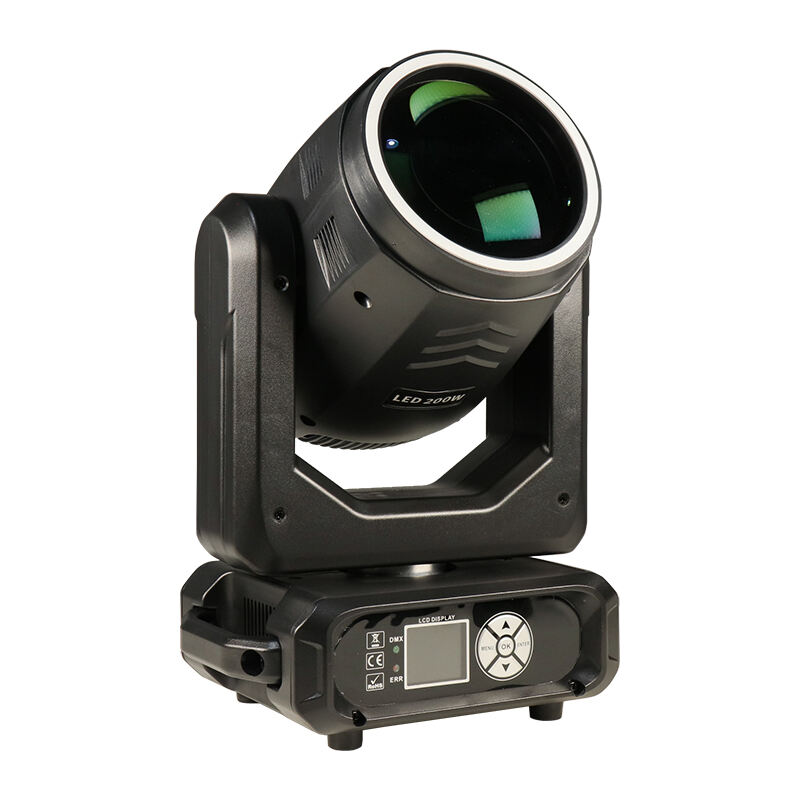
Understanding Beam Light Technology
Core Components and Functionality
Modern beam moving lights incorporate sophisticated optical systems that combine high-intensity discharge lamps, precision mirrors, and advanced control electronics to produce focused light beams with exceptional clarity and brightness. These fixtures utilize motorized pan and tilt mechanisms that allow for 360-degree horizontal rotation and extensive vertical movement, enabling lighting designers to direct beams anywhere within the performance space. The optical train includes multiple lenses, prisms, and gobos that can be precisely positioned to create various beam angles, shapes, and textures.
The control systems in contemporary beam moving lights respond to DMX512 protocols, allowing lighting operators to manipulate multiple parameters simultaneously including position, color, intensity, and special effects. Advanced fixtures feature built-in processors that can execute complex movement patterns and synchronized sequences without constant manual input. This technological sophistication enables seamless integration with automated lighting consoles and computer-based control systems used in professional stage productions.
Beam Characteristics and Output Quality
The defining characteristic of beam moving lights lies in their ability to produce extremely narrow, intense light beams that remain sharp and visible even at significant distances from the fixture. Unlike traditional spotlights that create broad washes of light, beam fixtures concentrate their output into tight columns of illumination that can cut through ambient lighting and atmospheric effects. This concentrated output makes them particularly effective for creating dramatic aerial effects, highlighting specific performers or stage elements, and establishing dynamic movement patterns that follow the rhythm and energy of performances.
Professional-grade beam moving lights typically offer multiple beam angle options through interchangeable lenses or zoom mechanisms, allowing operators to adjust from ultra-narrow pencil beams to moderately wide columns depending on the specific visual requirements. The color mixing capabilities often include CMY color wheels, fixed color wheels with saturated filters, and white light correction options that maintain consistent color temperature across different intensities and positions.
Visual Impact and Audience Engagement
Creating Atmospheric Depth and Dimension
Beam moving lights excel at transforming flat stage spaces into three-dimensional environments that appear to extend far beyond the physical boundaries of the performance area. By projecting beams at various angles and heights, lighting designers can create the illusion of vast spaces, intimate chambers, or otherworldly environments that support the narrative and emotional content of performances. The visible beam paths through haze or atmospheric effects add tangible dimension to the air itself, making the lighting an active participant in the visual storytelling process.
Strategic placement and programming of beam moving lights can establish visual layers that guide audience attention and create psychological depth within scenes. Front lighting positions can create dramatic silhouettes and rim lighting effects, while back lighting positions generate stunning aerial displays that frame performers and stage actions. Side lighting applications produce powerful cross-beam patterns that can segment the stage into distinct zones or create unified visual themes that span the entire performance space.
Dynamic Movement and Choreographic Integration
The mobility aspect of beam moving lights enables lighting designers to create choreographed light shows that complement and enhance the movement of performers on stage. Synchronized beam patterns can follow dancers, musicians, or actors as they move through their performances, creating visual extensions of their physical presence that amplify the emotional impact of their actions. This integration of lighting choreography with performance movement creates a unified artistic expression that engages audiences on multiple sensory levels.
Advanced programming capabilities allow beam moving lights to execute complex sequences that respond to musical cues, tempo changes, and dramatic moments within performances. The fixtures can sweep across audiences during climactic moments, creating immersive experiences that blur the boundaries between performers and spectators. These dynamic lighting effects generate excitement and energy that traditional static lighting cannot achieve, making them indispensable tools for contemporary stage productions.
Technical Applications and Programming Strategies
Position-Based Programming Techniques
Effective utilization of beam moving lights requires sophisticated programming approaches that maximize their positioning capabilities while maintaining smooth, professional-looking movements. Lighting operators typically establish key position presets that correspond to important stage locations, performer positions, and architectural elements within the venue. These preset positions serve as anchor points for creating fluid movement sequences that transition seamlessly between different lighting states throughout performances.
Programming strategies often incorporate mathematical curves and timing algorithms that produce organic-feeling movement patterns rather than mechanical, linear transitions. Professional lighting consoles offer advanced features such as motion blur compensation, acceleration and deceleration curves, and position feedback systems that ensure precise repeatability across multiple performances. The integration of position data with color and intensity programming creates complex lighting cues that can dramatically alter the visual character of scenes within seconds.
Effect Integration and Synchronization
Modern beam moving lights incorporate multiple effect systems including rotating gobos, prism wheels, frost filters, and strobe mechanisms that can be combined with movement and color changes to create highly complex visual displays. Programming these effects requires careful consideration of timing relationships between different parameters to avoid visual conflicts and maintain aesthetic coherence. Successful integration of multiple effects creates layered visual experiences that reveal new details upon repeated viewing, adding depth and sophistication to stage productions.
Synchronization capabilities extend beyond individual fixtures to encompass entire arrays of beam moving lights working in coordination to create large-scale visual effects. Network-based control systems enable precise timing coordination between multiple fixtures, allowing for wave patterns, chase sequences, and geometric formations that span entire stages. These synchronized effects can respond to audio inputs, timecode signals, or manual trigger events, providing lighting designers with powerful tools for creating precisely timed visual moments that align with musical and dramatic elements.
Industry Standards and Performance Requirements
Professional Specifications and Reliability
Professional beam moving lights must meet rigorous performance standards to function reliably in demanding production environments where equipment failure can disrupt live performances and compromise artistic vision. Industry specifications typically require fixtures to demonstrate consistent performance across extended operating periods, precise repeatability of position and color settings, and robust construction that withstands the physical demands of touring productions and permanent installations.
Thermal management represents a critical aspect of beam moving light design, as high-intensity discharge lamps generate substantial heat that must be effectively dissipated to maintain optimal performance and extend equipment lifespan. Professional fixtures incorporate sophisticated cooling systems with temperature monitoring and automatic shutdown protection to prevent overheating damage. Additionally, dust and moisture protection ratings ensure reliable operation in various environmental conditions encountered in touring and outdoor applications.
Installation and Maintenance Considerations
Proper installation of beam moving lights requires careful attention to structural support requirements, electrical power distribution, and control signal routing to ensure safe and reliable operation. Professional installations typically incorporate redundant control pathways, emergency stop systems, and fall protection measures that comply with relevant safety codes and industry best practices. Regular maintenance schedules include cleaning optical components, calibrating position sensors, and replacing consumable components such as lamps and filters according to manufacturer specifications.
The complexity of modern beam moving lights necessitates skilled technicians who understand both the mechanical and electronic systems within these fixtures. Training requirements for operators and maintenance personnel continue to evolve as manufacturers introduce new features and capabilities that enhance performance while increasing system complexity. Investment in proper training and maintenance programs ensures optimal performance and longevity from beam moving light installations while minimizing unexpected downtime during critical production periods.
Creative Design Applications
Theatrical and Concert Environments
In theatrical applications, beam moving lights serve multiple creative functions ranging from subtle mood enhancement to spectacular visual climaxes that define memorable moments within productions. Designers utilize these fixtures to create invisible transitions between scenes, establish temporal and spatial context, and provide dynamic visual punctuation for dramatic moments. The ability to rapidly change position, color, and intensity allows for seamless adaptation to different scenes within the same production while maintaining visual continuity and supporting narrative progression.
Concert lighting applications emphasize the energetic and celebratory aspects of beam moving lights, utilizing their dynamic capabilities to create excitement and engagement that matches the intensity of musical performances. Rock concerts, electronic music events, and large-scale festivals rely heavily on beam effects to create signature visual moments that become associated with specific songs or artists. The interplay between lighting effects and musical elements creates synesthetic experiences that enhance emotional connection between performers and audiences.
Corporate and Broadcast Applications
Corporate events and broadcast productions utilize beam moving lights to create professional, sophisticated lighting environments that enhance presenter visibility while providing visual interest and brand reinforcement. These applications often require more subtle implementation of beam effects, focusing on elegant movement patterns and color schemes that support rather than overwhelm the primary content. The precision and reliability of professional beam moving lights make them ideal for high-stakes corporate presentations where technical failures are unacceptable.
Television and streaming production environments benefit from the versatility and quick reconfiguration capabilities of beam moving lights, allowing lighting designers to adapt to different program segments, interview configurations, and performance requirements without extensive manual repositioning of fixtures. The ability to create consistent, repeatable lighting states supports the visual consistency required for ongoing series production while providing creative flexibility for special segments and guest appearances.
FAQ
What makes beam moving lights different from traditional spotlights
Beam moving lights differ fundamentally from traditional spotlights through their ability to produce extremely narrow, intense light beams that remain sharp and visible across long distances, combined with motorized positioning systems that enable dynamic movement and remote control. While traditional spotlights create broad washes of light with fixed positions, beam moving lights concentrate their output into tight columns that can be precisely directed anywhere within the performance space, creating dramatic aerial effects and sharp beam paths that are particularly effective when combined with atmospheric haze or fog.
How do beam moving lights enhance audience engagement during live performances
Beam moving lights enhance audience engagement by creating immersive visual experiences that extend beyond the stage boundaries and actively involve spectators in the performance environment. The dynamic movement capabilities allow lighting designers to sweep beams across audiences during climactic moments, creating shared experiences that blur the distinction between performers and spectators. Additionally, the synchronized choreography possible with beam moving lights creates visual extensions of performer movements that amplify emotional impact and generate excitement that traditional static lighting cannot achieve.
What technical considerations are important when installing beam moving lights
Critical technical considerations for beam moving light installation include adequate structural support for the weight and dynamic forces generated by moving fixtures, proper electrical power distribution with appropriate circuit protection, and reliable DMX control signal routing with backup systems. Installations must also account for heat dissipation requirements, maintenance access for lamp replacement and cleaning, and safety systems including fall protection and emergency stop capabilities. Professional installations require compliance with relevant electrical and structural codes while ensuring optimal positioning for creative lighting effects.
How do lighting designers program complex sequences with beam moving lights
Lighting designers program complex beam moving light sequences using sophisticated control consoles that manage multiple parameters simultaneously including position, color, intensity, and effects through DMX protocols. Programming typically involves establishing key position presets corresponding to important stage locations, then creating smooth transitions using mathematical curves and timing algorithms that produce organic movement patterns. Advanced programming incorporates synchronization between multiple fixtures, integration with audio cues and timecode signals, and the layering of different effects to create visually rich sequences that support the artistic content of performances.
Table of Contents
- Understanding Beam Light Technology
- Visual Impact and Audience Engagement
- Technical Applications and Programming Strategies
- Industry Standards and Performance Requirements
- Creative Design Applications
-
FAQ
- What makes beam moving lights different from traditional spotlights
- How do beam moving lights enhance audience engagement during live performances
- What technical considerations are important when installing beam moving lights
- How do lighting designers program complex sequences with beam moving lights