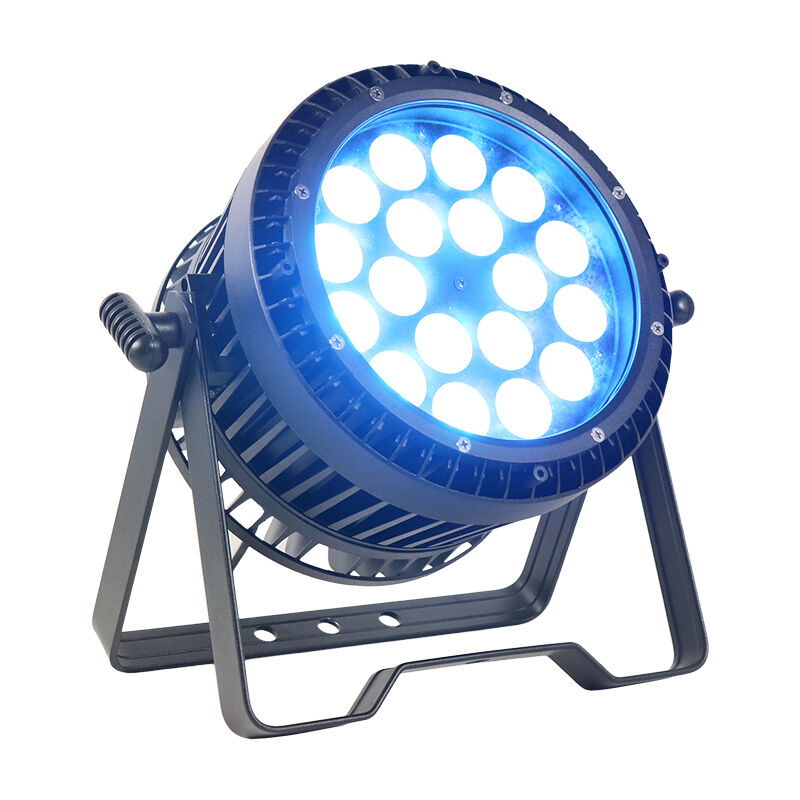
Gobo lights have revolutionized the world of stage lighting by offering unprecedented creative control over visual patterns and projections. These sophisticated lighting instruments use specialized templates called gobos to transform ordinary light beams into intricate designs, textures, and custom patterns that captivate audiences and enhance theatrical productions. From concert venues to corporate events, gobo lights have become an essential tool for lighting designers who demand precision, versatility, and artistic expression in their work.
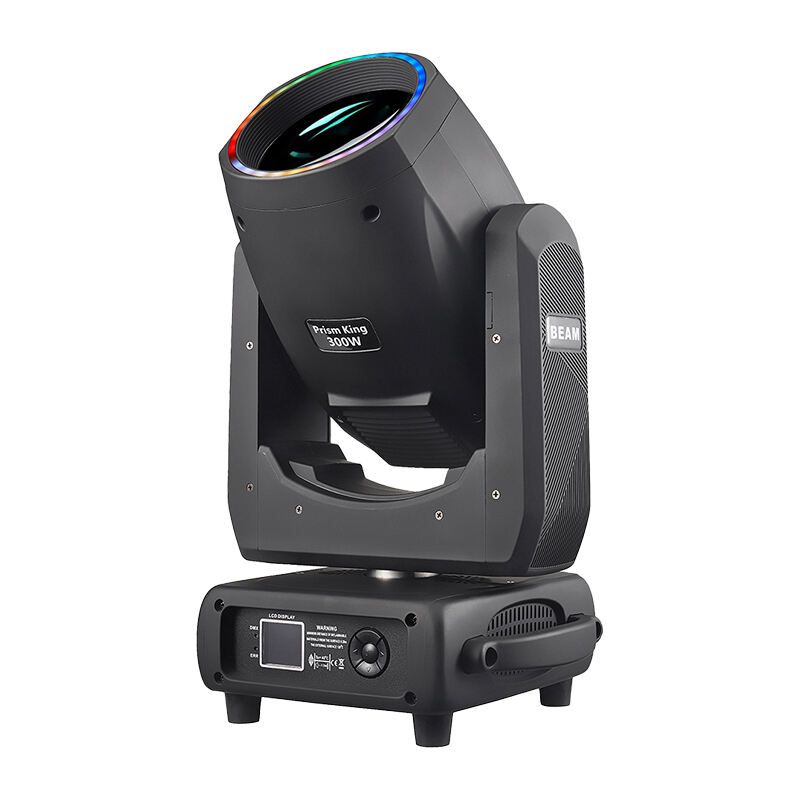
The term gobo originates from the phrase "goes between optics," referring to the physical template positioned between the light source and the lens system. Modern gobo lights incorporate advanced optical engineering, precise mechanical systems, and sophisticated control mechanisms to project patterns with remarkable clarity and definition. These instruments have evolved from simple static projectors to dynamic, computer-controlled fixtures capable of creating complex animations and seamless pattern transitions that respond to musical cues and dramatic moments.
Understanding Gobo Technology and Projection Mechanics
Optical System Design and Light Path Control
The fundamental principle behind gobo lights relies on a carefully engineered optical path that begins with a high-intensity lamp or LED source. This light source generates the raw illumination that passes through a series of optical components designed to focus, shape, and direct the beam. The condenser lens system collects and concentrates the light, creating a uniform field of illumination that ensures even distribution across the gobo template surface.
Within the optical assembly, the gobo holder positions the template at the precise focal point where maximum pattern definition occurs. The positioning accuracy is critical, as even minor misalignments can result in blurred or distorted projections that compromise the visual impact. Advanced gobo lights incorporate motorized positioning systems that allow real-time adjustments and pattern rotation during performances, enabling dynamic effects that were previously impossible to achieve.
The projection lens assembly completes the optical chain by magnifying and focusing the patterned light onto the target surface. Variable zoom capabilities allow lighting technicians to adjust the pattern size from tight, detailed projections to large-scale environmental washes that cover entire stage backdrops. This flexibility makes gobo lights suitable for intimate theatrical productions as well as massive concert productions where patterns must be visible from considerable distances.
Template Materials and Manufacturing Precision
Gobo templates themselves represent a critical component that directly influences pattern quality and durability. Steel gobos, manufactured through precise laser cutting or chemical etching processes, provide exceptional durability and sharp edge definition for geometric patterns and architectural textures. These metal templates can withstand the intense heat generated by high-wattage lighting fixtures without warping or degrading, making them ideal for professional applications where reliability is paramount.
Glass gobos offer superior image quality and color reproduction capabilities through photographic reproduction techniques and dichroic coating applications. These templates can reproduce photographic images, complex gradients, and multi-color designs with remarkable fidelity. The glass substrate provides excellent thermal stability while allowing for intricate detail levels that would be impossible to achieve with traditional cutting methods.
Custom gobo production has become increasingly sophisticated, with manufacturers offering rapid prototyping services and digital design consultations. Modern production facilities utilize computer-controlled manufacturing equipment that can translate digital artwork into physical templates with microscopic precision, ensuring that creative visions are accurately realized in the final projected image.
Pattern Creation Techniques and Design Principles
Geometric Pattern Development and Mathematical Precision
Creating effective gobo patterns requires understanding the relationship between template design and projected results. Geometric patterns benefit from mathematical precision in their construction, as slight irregularities become magnified during projection and can create distracting visual artifacts. Successful geometric designs often incorporate repetitive elements, symmetrical arrangements, and carefully calculated spacing that maintains visual coherence across various projection distances and angles.
The scaling factor between template size and projected image size must be considered during the design phase to ensure that fine details remain visible while maintaining overall pattern integrity. Lines that appear adequate on a small template may become too thin to project effectively, while elements that seem appropriately sized on the template may appear overwhelming when projected at large scales. Professional gobo designers utilize specialized software that can simulate projection results and optimize designs for specific fixture types and venue requirements.
Pattern density and contrast ratios play crucial roles in projection effectiveness, as overly complex designs can create visual confusion while insufficient contrast may result in barely visible projections. The most successful geometric patterns strike a balance between visual interest and clarity, incorporating negative space strategically to enhance the prominence of primary design elements.
Organic and Textural Pattern Applications
Organic patterns present unique challenges and opportunities in gobo design, as they must capture the essence of natural forms while remaining suitable for projection applications. Cloud patterns, water ripples, foliage textures, and flame effects require careful attention to edge transitions and density variations that create convincing organic appearances when projected onto various surface types.
Textural gobos excel at creating atmospheric environments and suggesting physical materials through light projection. Stone textures, brick patterns, wood grain effects, and fabric weaves can transform plain surfaces into convincing architectural elements or environmental backdrops. These patterns often incorporate subtle variations in transparency and graduated edge effects that create depth perception and visual richness.
Animation effects become particularly compelling when organic patterns are combined with motorized gobo rotation and movement systems. Slowly rotating cloud patterns can simulate weather systems, while oscillating water ripples create convincing aquatic environments. The key to successful organic pattern animation lies in matching the movement speed and direction to the natural behavior of the represented element, creating believable environmental effects that enhance rather than distract from the primary performance.
Control Systems and Programming Techniques
DMX Protocol Integration and Channel Management
Modern gobo lights integrate seamlessly with industry-standard DMX control protocols, allowing sophisticated programming and synchronization capabilities that extend far beyond simple on-off switching. Each controllable parameter, including gobo selection, rotation speed, pattern indexing, and focus adjustment, occupies dedicated DMX channels that can be precisely programmed and automated through lighting control consoles.
Channel assignment strategies become critical in complex installations where multiple gobo lights operate simultaneously. Logical channel grouping and consistent addressing schemes enable lighting operators to create coordinated effects across multiple fixtures while maintaining individual control over specific units when detailed adjustments are required. Advanced control systems support gobo lights through fixture libraries that automatically map control parameters to appropriate channels and provide intuitive programming interfaces.
Real-time control capabilities allow lighting operators to make instantaneous adjustments during live performances, responding to unexpected requirements or creative inspirations. Tactile control surfaces with dedicated encoder wheels and selection buttons provide immediate access to critical parameters, while touchscreen interfaces offer visual feedback and advanced programming options for complex effect sequences.
Automated Sequencing and Musical Synchronization
Automated sequencing transforms static gobo projections into dynamic visual narratives that evolve throughout performances. Time-coded sequences can synchronize pattern changes, rotation effects, and focus adjustments to musical beats, dramatic cues, or predetermined timing structures. This automation capability enables complex visual presentations that would be impossible to execute through manual control alone.
Musical synchronization systems analyze audio input signals and generate corresponding lighting responses that match rhythmic patterns, dynamic changes, and harmonic progressions. Gobo lights respond particularly well to percussive elements, with pattern changes and rotation effects accentuating drum beats and rhythmic accents. Advanced systems can differentiate between various musical elements and assign different gobo responses to bass lines, melody sections, and harmonic changes.
Beat detection algorithms enable gobo lights to maintain synchronization even when musical tempo changes occur during live performances. Adaptive timing systems continuously analyze incoming audio signals and adjust effect timing to maintain visual coherence with the musical performance, creating seamless integration between audio and visual elements that enhances the overall audience experience.
Applications Across Entertainment Industries
Theatrical Productions and Dramatic Enhancement
Theater applications demand gobo lights that can subtly enhance dramatic moments without overwhelming the primary action on stage. Architectural patterns projected onto cycloramas create convincing indoor and outdoor environments, while textural gobos suggest specific locations and time periods through carefully chosen visual references. The ability to change patterns quickly and silently between scenes makes gobo lights invaluable tools for productions with multiple location changes.
Character lighting techniques utilize custom gobos to create signature visual themes associated with specific characters or plot elements. Shadow patterns can suggest psychological states or supernatural influences, while geometric designs might represent technological or futuristic themes. These visual associations help audiences process complex narratives and emotional subtexts through subconscious visual cues that complement the verbal and physical performance elements.
Collaborative design processes between lighting designers and scenic artists ensure that gobo projections integrate seamlessly with physical set elements, costume designs, and overall production aesthetics. This coordination prevents visual conflicts and creates unified artistic visions that support rather than compete with the theatrical storytelling objectives.
Concert Productions and Musical Performance Enhancement
Concert applications push gobo lights to their technical limits, requiring fixtures capable of creating bold, high-contrast patterns that remain visible despite competing stage lighting and atmospheric haze effects. Large-scale patterns projected onto rear screens and architectural surfaces create immersive environments that transport audiences into the musical performance, while synchronized movement effects generate excitement and energy that amplifies the emotional impact of the music.
Artist branding through custom gobo designs has become an essential element of major touring productions. Logo projections, signature symbols, and tour-specific graphics create visual identification that reinforces brand recognition while providing unique visual elements that distinguish each performance from previous tours. These custom patterns often incorporate elements that reference song lyrics, album artwork, or artistic themes central to the musician's creative identity.
Audience engagement techniques utilize gobo lights to extend the performance beyond the stage boundaries, projecting patterns into audience areas and creating inclusive visual experiences. These applications require careful consideration of projection angles, pattern scales, and safety considerations to ensure that effects enhance rather than distract from the musical performance while maintaining appropriate safety standards.
Technical Specifications and Performance Characteristics
Optical Performance Standards and Measurement Criteria
Professional gobo lights must meet stringent optical performance standards that ensure consistent pattern quality across various operating conditions. Light output measurements, typically expressed in lumens or lux values at specified distances, provide quantitative assessments of projection brightness and coverage capabilities. These specifications enable lighting designers to calculate exact fixture requirements for specific venue sizes and ambient lighting conditions.
Pattern sharpness metrics evaluate the ability of optical systems to maintain crisp edge definition across the entire projection field. Advanced measurement techniques utilize resolution test patterns and computerized analysis systems to quantify optical performance and identify potential focus variations that might affect pattern quality. This technical documentation ensures that fixtures will perform consistently in demanding professional applications.
Color temperature consistency becomes particularly important when multiple gobo lights operate simultaneously, as variations in color output can create distracting visual inconsistencies. Professional fixtures undergo rigorous color matching procedures and include adjustment mechanisms that allow technicians to fine-tune color output to match other lighting instruments in complex installations.
Mechanical Reliability and Environmental Durability
Mechanical systems within gobo lights must withstand the demanding conditions of professional entertainment environments, including frequent transport, temperature variations, and continuous operation cycles. Precision bearings, high-quality motors, and robust construction materials ensure reliable performance throughout extended touring schedules and permanent installation applications.
Environmental protection ratings indicate the level of protection against dust, moisture, and other potentially damaging elements that fixtures might encounter in outdoor venues or adverse conditions. IP-rated enclosures and sealed optical chambers protect sensitive internal components while maintaining optimal performance characteristics across various environmental challenges.
Thermal management systems prevent overheating damage to both optical components and gobo templates during extended operation periods. Advanced cooling designs incorporate heat sinks, forced air circulation, and temperature monitoring systems that maintain safe operating temperatures while minimizing noise levels that could interfere with audio performances.
FAQ
What materials are used to create gobo templates and how do they affect pattern quality
Gobo templates are primarily manufactured from steel, glass, or specialized plastic materials, each offering distinct advantages for different applications. Steel gobos provide exceptional durability and sharp geometric patterns through laser cutting or chemical etching processes, making them ideal for high-heat applications and long-term use. Glass gobos enable photographic image reproduction and full-color designs with superior detail resolution, though they require more careful handling and are typically used in lower-heat LED fixtures. The material choice directly impacts pattern sharpness, color accuracy, heat tolerance, and overall projection quality.
How do motorized gobo wheels enhance pattern selection and effect capabilities
Motorized gobo wheels allow remote selection between multiple patterns without manual intervention, enabling seamless pattern transitions during live performances. These systems typically accommodate 6-14 different gobos in a rotating wheel mechanism that can position any template in the optical path within seconds. Advanced wheels include indexing capabilities that allow precise pattern positioning and continuous rotation effects for dynamic animations. This automation capability transforms static projections into dynamic visual experiences while reducing the need for multiple fixtures to achieve varied pattern effects.
What factors determine the optimal projection distance and pattern size for gobo lights
Projection distance and pattern size relationships depend on the fixture's optical design, lens focal length, and zoom capabilities. Most professional gobo lights provide zoom ranges between 10-50 degrees, allowing pattern size adjustments from tight 2-foot circles to broad 30-foot coverage areas depending on throw distance. Optimal performance typically occurs within the manufacturer's specified distance ranges where pattern focus remains sharp and light output maintains adequate intensity. Factors including ambient lighting levels, surface texture, and viewing angles must also be considered when determining appropriate projection parameters for specific applications.
How do gobo lights integrate with modern lighting control systems and automation protocols
Modern gobo lights utilize DMX512 protocol for integration with professional lighting control systems, with each controllable parameter assigned to specific DMX channels including gobo selection, rotation speed, focus adjustment, and intensity control. Advanced fixtures support Art-Net and sACN protocols for network-based control systems, enabling integration with computerized lighting consoles and automated sequencing software. Programming capabilities include position memory storage, effect macros, and real-time parameter adjustment through both dedicated control surfaces and software interfaces, allowing sophisticated automated light shows synchronized to music or predetermined timing sequences.
Table of Contents
- Understanding Gobo Technology and Projection Mechanics
- Pattern Creation Techniques and Design Principles
- Control Systems and Programming Techniques
- Applications Across Entertainment Industries
- Technical Specifications and Performance Characteristics
-
FAQ
- What materials are used to create gobo templates and how do they affect pattern quality
- How do motorized gobo wheels enhance pattern selection and effect capabilities
- What factors determine the optimal projection distance and pattern size for gobo lights
- How do gobo lights integrate with modern lighting control systems and automation protocols