
 EN
EN


Stage lighting has undergone a revolutionary transformation with the introduction of LED technology, fundamentally changing how concerts and theaters create immersive visual experiences. LED Pars have emerged as the cornerstone of modern stage lighting systems, offering unprecedented control, energy efficiency, and creative possibilities that traditional incandescent and halogen fixtures simply cannot match. These sophisticated lighting instruments have become essential tools for lighting designers seeking to craft memorable performances that captivate audiences and enhance artistic expression.
The Technical Revolution Behind LED Par Technology
Advanced Color Mixing Capabilities
LED Pars incorporate sophisticated color mixing technology that allows lighting designers to create virtually any color in the visible spectrum. Unlike traditional Par cans that require colored gels or filters, LED Pars utilize multiple LED chips in red, green, blue, white, amber, and ultraviolet configurations. This RGBWAUV setup enables smooth color transitions and provides access to millions of color combinations with precise digital control. The ability to adjust color temperature and saturation in real-time gives lighting operators unprecedented flexibility during live performances.
The advanced color rendering capabilities of LED Pars ensure that performers and stage elements appear natural and vibrant under various lighting conditions. With high Color Rendering Index (CRI) values typically exceeding 90, these fixtures reproduce colors accurately, which is crucial for television broadcasts and professional photography. The consistent color output across multiple fixtures eliminates the color matching challenges that plagued traditional lighting systems, ensuring uniform illumination throughout the performance space.
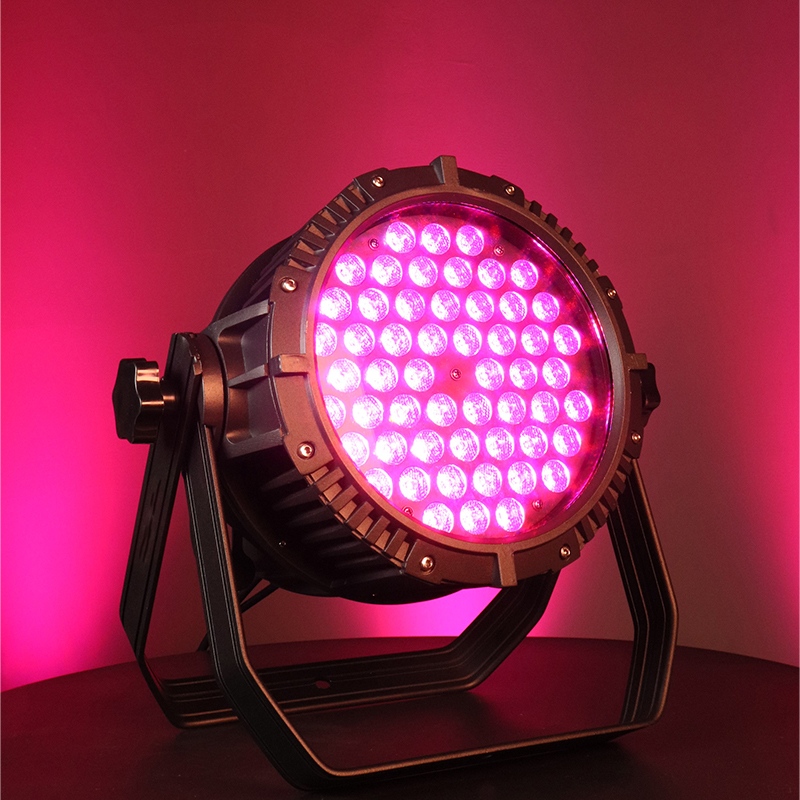
Energy Efficiency and Heat Management
LED Pars consume significantly less electricity compared to conventional tungsten or halogen Par cans, reducing operational costs and environmental impact. A typical LED Par fixture consuming 18 watts can produce light output equivalent to a 200-watt halogen fixture, representing a dramatic improvement in energy efficiency. This reduced power consumption translates to lower electricity bills for venues and reduced strain on electrical infrastructure, allowing for more extensive lighting installations without exceeding power capacity limitations.
The reduced heat generation of LED Pars creates a more comfortable environment for performers and audiences while extending the lifespan of the fixtures themselves. Traditional Par cans generate substantial heat that can affect stage temperature and performer comfort, particularly in smaller venues with limited ventilation. LED Pars operate at much cooler temperatures, eliminating the need for extensive cooling systems and reducing the risk of heat-related equipment failures during critical performance moments.
Creative Applications in Concert Lighting Design
Dynamic Color Chases and Effects
Concert lighting designers leverage LED Pars to create spectacular color chases and dynamic effects that synchronize with musical performances. The rapid response time of LED technology allows for instantaneous color changes and strobing effects that follow the rhythm and intensity of live music. These fixtures can be programmed to create complex chase patterns across multiple units, producing waves of color that flow across the stage or audience areas in perfect synchronization with the musical arrangement.
The programmable nature of LED Pars enables lighting designers to store multiple looks and effects that can be triggered instantly during performances. This capability is particularly valuable for touring productions where lighting cues must be precisely timed and consistently reproduced across different venues. The ability to recall complex lighting states with a single command allows lighting operators to focus on the artistic aspects of the performance rather than technical execution.
Audience Immersion and Atmospheric Enhancement
LED Pars excel at creating immersive environments that transport audiences into the artistic vision of the performance. By positioning these fixtures throughout the venue, lighting designers can wash entire audience areas in coordinated colors that complement the stage action. This technique, known as audience lighting or house lighting effects, helps break down the barrier between performers and spectators, creating a unified experiential environment that enhances emotional connection.
The versatility of LED Pars allows for subtle atmospheric enhancement during quiet musical passages as well as explosive visual displays during climactic moments. Lighting designers can gradually shift colors and intensities to build tension or create emotional release, supporting the narrative arc of the musical performance. The smooth dimming capabilities of LED technology enable seamless transitions that would be impossible with traditional fixtures, maintaining the artistic flow of the performance without jarring lighting changes.
Theater Applications and Dramatic Enhancement
Scene Setting and Mood Creation
In theatrical productions, LED Pars serve as powerful tools for establishing time, place, and emotional context through strategic color choices and lighting intensity. These fixtures can simulate natural lighting conditions such as dawn, daylight, sunset, or moonlight with remarkable accuracy, helping audiences suspend disbelief and become immersed in the theatrical narrative. The ability to program specific color temperatures and intensities allows lighting designers to create distinct visual signatures for different scenes or acts.
The precise control offered by LED Pars enables lighting designers to support character development and emotional storytelling through subtle lighting changes. A gradual shift from warm amber tones to cool blues can reflect a character's emotional journey or signal a change in dramatic tension. These nuanced lighting effects, when properly integrated with the director's vision, become an invisible yet powerful storytelling element that enhances audience engagement and comprehension.
Flexibility for Multiple Productions
Theater venues benefit tremendously from the versatility of LED Pars when hosting multiple productions throughout a season. Unlike traditional colored gels that must be physically changed between shows, LED Pars can be reprogrammed to suit different productions without any physical modifications to the fixtures. This flexibility reduces changeover time between productions and eliminates the ongoing cost of purchasing and installing colored filters for each new show.
The programmable nature of LED Pars allows theaters to maintain lighting libraries for different productions, enabling quick setup and consistent reproduction of lighting designs. This capability is particularly valuable for repertory theaters that rotate between multiple productions or for venues that host touring shows with specific lighting requirements. The ability to store and recall lighting configurations reduces setup time and ensures that artistic visions are faithfully reproduced for each performance.
Installation and Integration Considerations
DMX Control and Programming
LED Pars integrate seamlessly with standard DMX512 lighting control systems, allowing for sophisticated programming and real-time control during performances. Each fixture typically requires multiple DMX channels to control various parameters including red, green, blue, white, amber, and ultraviolet LED intensities, as well as overall dimming and special effects functions. This multi-channel approach provides granular control over every aspect of the fixture's output, enabling precise color matching and effect creation.
Modern lighting consoles can group multiple LED Pars together for coordinated control while maintaining the ability to address individual fixtures when needed. This grouping capability allows lighting operators to create large-scale effects across multiple fixtures while retaining the flexibility to highlight specific areas or create detailed patterns. The integration with lighting console software enables the use of color palettes, effect engines, and automated programming tools that streamline the design process.
Power Distribution and Rigging Requirements
The reduced power consumption of LED Pars allows venues to install larger quantities of fixtures without exceeding electrical capacity limitations. Standard electrical circuits can support significantly more LED Pars compared to traditional Par cans, enabling more comprehensive lighting coverage and greater design flexibility. This efficiency advantage is particularly beneficial for touring productions where power availability may be limited or costly.
LED Pars are typically lighter than their traditional counterparts, reducing structural load requirements for rigging systems and enabling installation in locations where weight restrictions would prohibit heavier fixtures. The reduced weight also simplifies transportation and setup for touring productions, reducing labor costs and setup time. Many LED Pars feature versatile mounting options including clamps, floor stands, and truss mounting systems that accommodate various installation scenarios.
Maintenance and Operational Benefits
Extended Lifespan and Reliability
LED Pars offer exceptional longevity with typical lifespans exceeding 50,000 hours of operation, dramatically reducing maintenance requirements and replacement costs. This extended lifespan is particularly valuable for venues with heavy usage schedules where frequent lamp replacements would be disruptive and expensive. The solid-state nature of LED technology eliminates the fragility associated with filament-based bulbs, reducing failures caused by vibration or shock during transportation and setup.
The consistent light output throughout the operational lifespan of LED Pars ensures that lighting designs maintain their intended appearance over time. Traditional incandescent bulbs gradually dim as they age, requiring regular replacement to maintain consistent output levels. LED Pars maintain stable output characteristics throughout their operational life, reducing the need for intensity adjustments and recalibration of lighting systems.
Reduced Operational Complexity
The elimination of gel changes and lamp replacements significantly reduces the operational complexity associated with maintaining stage lighting systems. LED Pars require minimal routine maintenance beyond occasional cleaning and DMX cable management, freeing technical staff to focus on creative and operational aspects of productions. This reduced maintenance burden is particularly beneficial for smaller venues with limited technical staff or touring productions where maintenance opportunities are restricted.
The instant-on capability of LED Pars eliminates the warm-up time required by traditional discharge lamps, allowing for immediate use when power is applied. This feature enables more efficient setup procedures and eliminates the need to keep fixtures powered during extended breaks between uses. The ability to power fixtures on and off without affecting lifespan provides operational flexibility that is not available with traditional lighting technologies.
FAQ
What makes LED Pars more suitable for touring productions than traditional Par cans
LED Pars offer significant advantages for touring productions including reduced weight for easier transportation, lower power consumption that simplifies electrical requirements at various venues, and the elimination of fragile bulbs that are prone to damage during transport. The color-changing capability eliminates the need to carry extensive gel inventories, while the programmable nature allows for consistent lighting reproduction across different venues without physical modifications to the fixtures.
How do LED Pars compare to moving lights in terms of versatility and cost
While moving lights offer pan and tilt movement capabilities, LED Pars provide excellent color mixing and intensity control at a significantly lower cost per fixture. LED Pars are ideal for applications requiring consistent area coverage, color washes, and audience lighting where movement is not necessary. The lower cost allows designers to use larger quantities of LED Pars to create comprehensive coverage that might be prohibitively expensive with moving lights, making them an excellent complement to rather than replacement for moving fixtures.
Can LED Pars effectively replace traditional Par cans in existing theater installations
LED Pars can successfully replace traditional Par cans in most theater applications, offering superior color control, energy efficiency, and operational flexibility. The main considerations include ensuring adequate DMX control infrastructure to take advantage of the color-changing capabilities and potentially adjusting lighting positions to account for the different beam characteristics of LED fixtures. Most venues find that the operational benefits and creative possibilities far outweigh any initial adjustment requirements.
What control system requirements are necessary to fully utilize LED Par capabilities
To fully utilize LED Pars, venues need DMX512-compatible lighting control systems with sufficient channel capacity to address the multiple parameters of each fixture. Modern lighting consoles with color picker tools, effect engines, and grouping capabilities significantly enhance the programming and operational experience. While basic DMX controllers can operate LED Pars, advanced consoles with color mixing tools and automated programming features unlock the full creative potential of these versatile fixtures.
Table of Contents
- The Technical Revolution Behind LED Par Technology
- Creative Applications in Concert Lighting Design
- Theater Applications and Dramatic Enhancement
- Installation and Integration Considerations
- Maintenance and Operational Benefits
-
FAQ
- What makes LED Pars more suitable for touring productions than traditional Par cans
- How do LED Pars compare to moving lights in terms of versatility and cost
- Can LED Pars effectively replace traditional Par cans in existing theater installations
- What control system requirements are necessary to fully utilize LED Par capabilities