
 EN
EN


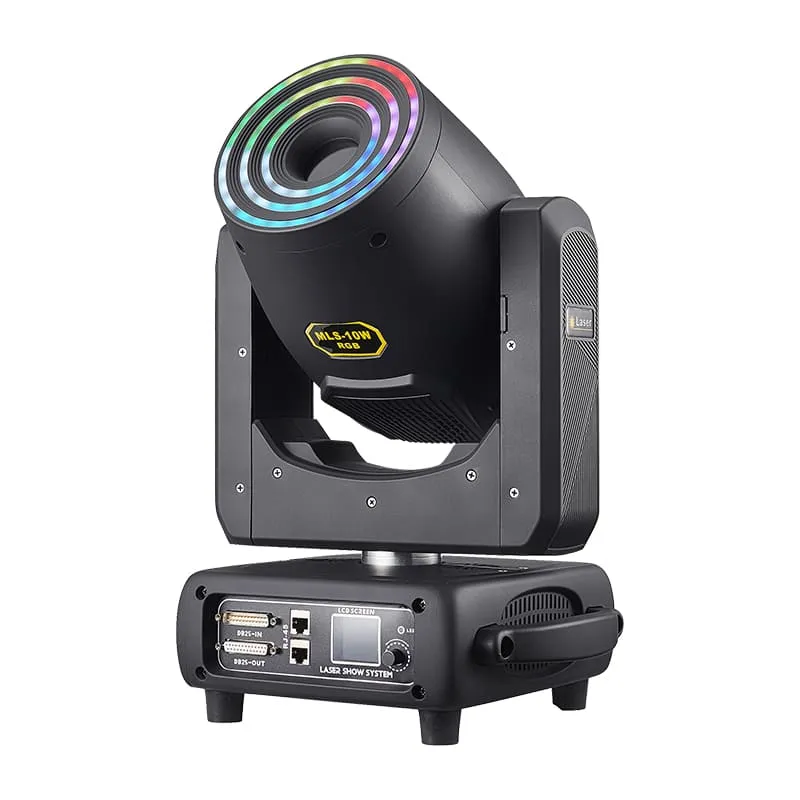
When production companies and venue operators begin planning large-scale or recurring live events, one of the most strategic decisions they face is selecting concert lighting systems that can scale across multiple locations without compromising visual consistency or operational efficiency. The challenge is not simply about brightness or beam effects — it is about finding systems that can be customized, branded, and replicated across different venues while meeting the unique technical and logistical demands of each site. This is where OEM and ODM capability becomes a critical selection factor rather than a secondary consideration.
Understanding which concert lighting systems genuinely support OEM and ODM arrangements for multi-venue deployments requires evaluating far more than product specifications. It demands an assessment of manufacturer flexibility, fixture architecture, color system compatibility, and the operational logic of systems that must perform reliably night after night across arenas, outdoor stages, theaters, and hybrid performance spaces. This article provides a comprehensive guide for production managers, technical directors, and procurement specialists navigating these decisions.
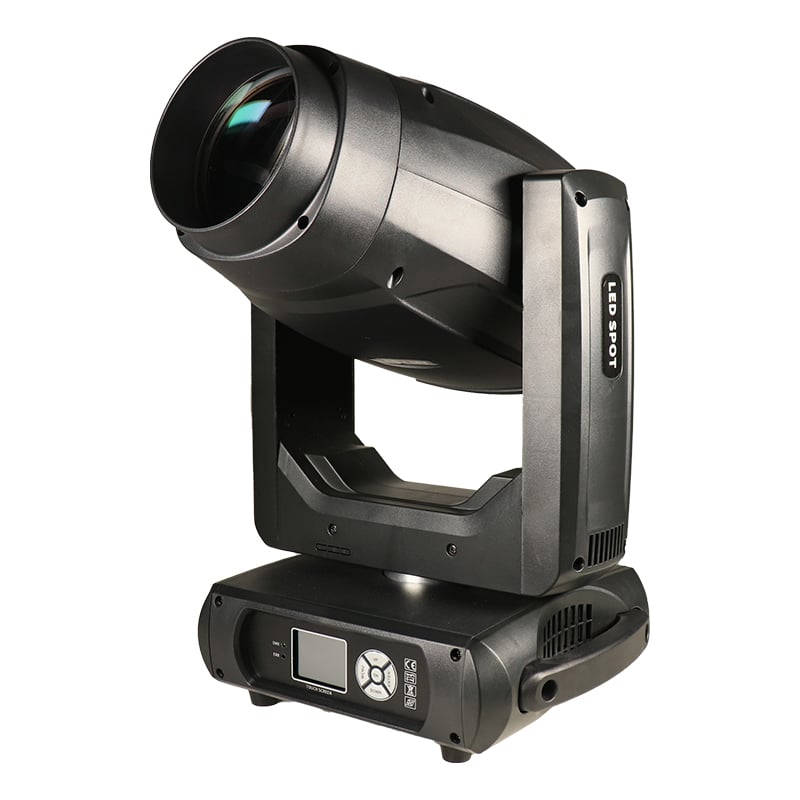
OEM and ODM in the Context of Concert Lighting
Defining OEM and ODM for Live Event Production
In industrial and B2B supply chains, OEM stands for Original Equipment Manufacturer and refers to arrangements where a buyer uses a manufacturer's core product under their own brand identity. ODM, or Original Design Manufacturer, goes a step further — the manufacturer also handles engineering design based on the buyer's functional specifications. For concert lighting systems, these distinctions matter enormously when a production house, touring company, or venue operator wants to deploy a consistent look across multiple sites without assembling a patchwork of incompatible products.
A typical OEM agreement in this space allows a lighting production company to source high-performance moving head fixtures, color mixing modules, or intelligent wash systems from a capable manufacturer and brand them under their own label. ODM takes this further by allowing the buyer to specify beam angle ranges, control protocol preferences, housing color, or even proprietary DMX channel mapping that suits their existing workflow. Both models are valuable for multi-venue projects, but they serve different levels of customization maturity.
When evaluating concert lighting systems for these arrangements, buyers must confirm whether a manufacturer has genuine OEM/ODM infrastructure — including dedicated engineering teams, tooling flexibility, and export documentation capabilities — rather than simply marketing themselves as 'OEM-friendly.' The distinction between a factory capable of white-label packaging and one that can genuinely re-engineer fixtures to client specifications is significant.
Why Multi-Venue Projects Demand a Unified Approach
Multi-venue projects introduce a set of technical and logistical pressures that single-venue productions do not face. A touring production that moves through five to ten venues per month must contend with varying power infrastructure, stage dimensions, rigging point loads, and ambient light conditions. Concert lighting systems must therefore be robust enough to perform consistently across wildly different physical environments while remaining simple enough for local crew to set up, patch, and operate without extensive on-site training.
Consistency of color output is one of the most critical factors. If the same show design is reproduced across multiple venues, any variation in color rendering between fixture units becomes immediately visible to audiences and lighting designers. This is one reason why CMY color mixing systems have become a standard in professional touring concert lighting systems — they allow precise, repeatable color matching across individual fixtures and entire rigs, regardless of venue type. An OEM partner that can maintain tight color consistency across a production run of identical units offers a meaningful competitive advantage for multi-venue clients.
Beyond color, the structural and mechanical reliability of fixtures also becomes more critical in multi-venue scenarios. Equipment that is loaded, transported, rigged, and de-rigged repeatedly is subject to vibration stress, connector wear, and thermal cycling that stationary installations are not. Concert lighting systems chosen for touring or multi-venue deployment must be engineered with these mechanical realities in mind, and an ODM partnership enables buyers to specify enhanced durability features — such as reinforced yoke connections or road-case-optimized form factors — that off-the-shelf products may not include.
Key Technical Features Supporting Multi-Venue OEM/ODM Compatibility
CMY and CTO Color Systems as a Foundation for Repeatability
Among all the technical characteristics that determine whether concert lighting systems are suitable for OEM/ODM multi-venue projects, the color mixing architecture is perhaps the most fundamental. CMY systems — Cyan, Magenta, Yellow — allow infinitely variable subtractive color mixing across a full spectrum, delivering highly consistent results that can be calibrated and matched across multiple units. When a production designer specifies a particular amber wash or a cool steel blue, CMY-equipped fixtures can reproduce that color precisely, unit by unit and venue by venue.
CTO — Correction Tungsten Orange — filtering capability adds another layer of color temperature control that is essential when mixing artificial lighting with existing venue sources or natural daylight in outdoor concert settings. Concert lighting systems that combine CMY and CTO in a single optical path give lighting designers a far greater range of expressive control without requiring additional color correction accessories. For multi-venue projects where rigging time is limited and flexibility is essential, this integrated approach significantly reduces complexity on the floor.
An OEM/ODM manufacturer that builds its fixture architecture around a CMY plus CTO color platform is offering multi-venue clients a system with built-in replicability. Every unit produced under that platform will share the same optical logic, making replacement units interchangeable and reducing the calibration burden when scaling from a pilot venue to a full national or international tour.
BSW Functionality and Its Role in Multi-Application Versatility
BSW — Beam, Spot, and Wash — functionality in a single fixture is another defining characteristic that separates professional-grade concert lighting systems from entry-level alternatives. Multi-venue projects often encounter dramatically different stage configurations: a beam-heavy look may suit a large arena while a broader wash aesthetic may be required for an intimate theater or festival stage. BSW fixtures handle both demands without requiring the production company to carry multiple fixture types.
The value of BSW capability is amplified in OEM/ODM arrangements because it allows a single platform fixture to be customized and deployed across diverse venue types as part of a unified rig. A production company that invests in an ODM arrangement for a high-output BSW moving head is essentially commissioning a versatile tool that can adapt to the aesthetic and technical requirements of any venue on a tour itinerary, all while carrying the buyer's branding and configured to their standard DMX profile.
When evaluating concert lighting systems with BSW capability for multi-venue OEM/ODM purposes, buyers should pay close attention to the zoom range, the transition speed between modes, and the gobo selection options. These parameters define how quickly a crew can adapt the fixture's output between shows and how wide a range of visual looks the production design team can achieve without changing physical equipment. A concert lighting systems platform that integrates CMY, CTO, and BSW into a single 500W-class moving head is an especially strong candidate for this kind of multi-venue standardization strategy.
Evaluating Manufacturers for OEM/ODM Multi-Venue Readiness
Engineering and Customization Depth
Not every manufacturer that advertises OEM services has the engineering infrastructure to support a genuine ODM relationship. For buyers managing multi-venue concert lighting systems projects, the distinction is important. True ODM capability means the manufacturer can adapt mechanical design, PCB layout, firmware parameters, control protocols, and optical modules based on client-specific requirements. This level of engagement requires dedicated R&D resources, tooling capacity, and a structured client communication process.
When vetting manufacturers, production companies should request evidence of completed ODM projects — including documentation of engineering changes made for previous clients — and assess whether the factory has a clear process for handling revision cycles, approval stages, and quality benchmarking. Concert lighting systems that are produced under ODM arrangements for major touring companies or venue chains are typically the result of months of collaborative development, not a simple relabeling exercise.
Manufacturers that have experience producing concert lighting systems for demanding multi-venue clients will typically have standardized test protocols, output calibration procedures, and quality assurance checkpoints that ensure each unit leaving the factory matches a defined performance benchmark. This is non-negotiable for multi-venue deployments where a single underperforming fixture in a matched rig can create visible inconsistencies in the show.
Production Capacity and Supply Chain Reliability
For multi-venue projects that may require dozens or hundreds of identical fixture units, the manufacturer's production capacity is as important as its engineering capability. Concert lighting systems procured under OEM arrangements must be available in sufficient quantities, within acceptable lead times, and with a reliable supply of spare parts and consumables for ongoing maintenance. A manufacturer that cannot commit to consistent production volumes becomes a logistical liability for large-scale production companies.
Supply chain transparency is another key consideration. Buyers investing in OEM or ODM concert lighting systems should understand the source of key optical components, LED emitters, and driver electronics used in their custom fixtures. Supply disruptions in any of these component categories can delay production runs and create gaps in a venue operator's equipment inventory at critical moments in the touring calendar.
Manufacturers with vertically integrated production facilities — those that control key subassembly processes internally — generally offer more reliable delivery timelines and better component quality control than those relying heavily on third-party subcontractors. For concert lighting systems that need to perform consistently across multiple venues and production cycles, this supply chain visibility is a strategic asset.
Practical Deployment Considerations for Multi-Venue Lighting Projects
Standardizing DMX Profiles and Control Integration
One of the practical advantages of commissioning concert lighting systems through an OEM or ODM arrangement is the ability to standardize DMX channel maps across an entire fleet of fixtures. In a multi-venue touring context, the lighting console operator is typically working from a pre-programmed show file that references specific channel assignments for each fixture type. If every fixture on the rig shares an identical DMX profile, patching a new venue requires only address assignment rather than full console reprogramming.
ODM agreements allow production companies to define the exact DMX channel layout, parameter ranges, and response curves they need for their standard show files. This level of control over the firmware behavior of concert lighting systems dramatically reduces setup time at each new venue and minimizes the risk of operator error during the critical hours before showtime. For productions running on tight turnaround schedules, this standardization can be the difference between a smooth technical day and a costly overrun.
Beyond DMX, network-based lighting control protocols such as RDM, sACN, and Art-Net are increasingly standard in professional concert lighting systems deployments. OEM manufacturers that can configure these protocols to match a client's preferred control architecture offer an additional layer of operational consistency that is particularly valuable across venues with different network infrastructure.
Road Case Design and Physical Standardization
Physical standardization of concert lighting systems hardware is often overlooked in OEM/ODM discussions but is critically important for multi-venue logistics. Fixtures that are designed with uniform yoke dimensions, standardized mounting hardware, and compatible road case footprints can be loaded, transported, and rigged far more efficiently than mixed-format rigs. Every minute saved in the load-in process translates directly into cost reduction and technical rehearsal time gained.
ODM arrangements give buyers the opportunity to specify physical form factor details that affect packaging density, truck pack efficiency, and rigging crew ergonomics. A production company running the same show across 20 venues per month has a strong financial incentive to optimize these logistics, and the ability to define fixture dimensions and road case compatibility as part of the ODM brief is a meaningful benefit of working with a manufacturer that supports this level of engagement.
Consistent cable and connector specifications across a fleet of concert lighting systems also reduce spare parts inventory complexity and simplify field maintenance. If every fixture in a rig uses the same power connector, DMX input/output configuration, and safety cable attachment point, then technicians can service any unit in the rig with the same toolkit and the same set of spares — a practical advantage that compounds across hundreds of venue shows.
FAQ
What makes a concert lighting system suitable for OEM customization?
A concert lighting system is suitable for OEM customization when its manufacturer has dedicated engineering resources, flexible tooling capacity, and a structured process for adapting firmware, housing, branding, and optical configuration to client specifications. Systems built on modular platforms — particularly those combining CMY, CTO, and BSW functions — are inherently easier to customize because their core architecture is already designed for performance flexibility.
How do CMY color systems benefit multi-venue touring productions?
CMY color systems provide precise, repeatable color matching across individual fixture units, which is essential when the same show design must be reproduced across multiple venues. Unlike gel-based systems, CMY mixing allows consistent color output to be maintained across an entire fleet of identical fixtures, reducing calibration time at each new venue and ensuring that the audience experience remains visually consistent regardless of location.
Can a single BSW fixture type handle all venue formats in a touring rig?
A high-quality BSW fixture with a wide zoom range and sufficient output power can serve as the primary workhorse across most venue formats encountered in a touring production, from large arenas to mid-size theaters. While some production designs may call for specialized fixtures for specific effects, a BSW platform reduces the total number of fixture types in the rig, simplifying logistics, control programming, and maintenance across multi-venue deployments.
What documentation should buyers request when evaluating OEM manufacturers for concert lighting systems?
Buyers should request completed project case studies showing previous OEM or ODM engagements, quality control and calibration test reports, component sourcing transparency documentation, and evidence of export compliance certifications relevant to their target markets. Firmware documentation showing DMX channel map flexibility and protocol support is also essential when evaluating whether a manufacturer can deliver concert lighting systems configured to a buyer's specific operational standards.
Table of Contents
- OEM and ODM in the Context of Concert Lighting
- Key Technical Features Supporting Multi-Venue OEM/ODM Compatibility
- Evaluating Manufacturers for OEM/ODM Multi-Venue Readiness
- Practical Deployment Considerations for Multi-Venue Lighting Projects
-
FAQ
- What makes a concert lighting system suitable for OEM customization?
- How do CMY color systems benefit multi-venue touring productions?
- Can a single BSW fixture type handle all venue formats in a touring rig?
- What documentation should buyers request when evaluating OEM manufacturers for concert lighting systems?