
 EN
EN


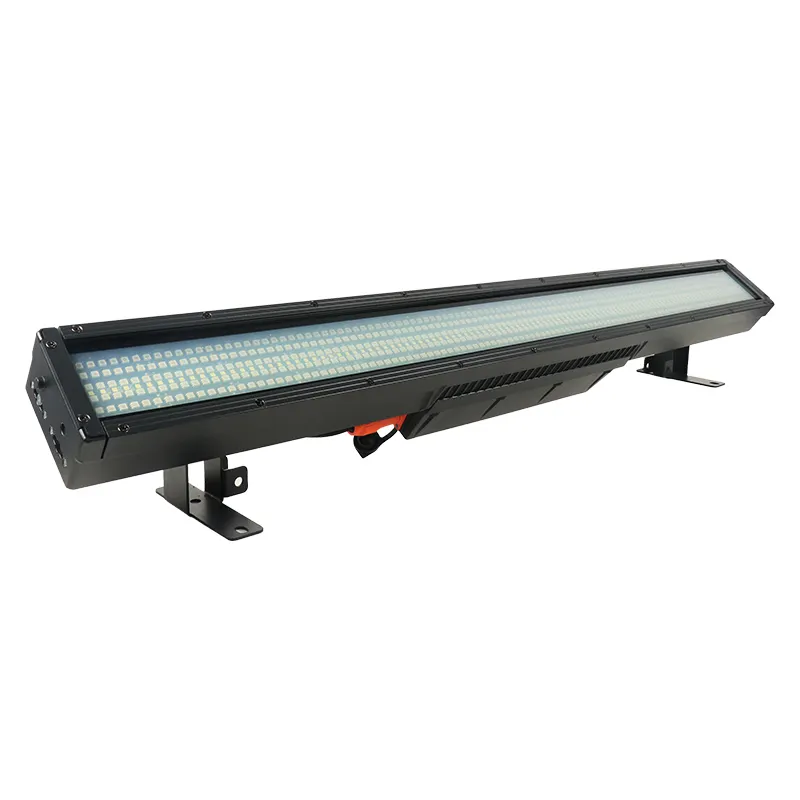
When it comes to delivering a truly memorable live performance, few elements shape the audience experience as powerfully as light. Concert lighting fixtures are the backbone of any professional stage design, transforming a bare platform into an immersive, emotionally charged environment. The question of which concert lighting fixtures offer the best performance is one that lighting designers, production managers, and venue operators ask constantly — and the answer depends on a carefully considered set of technical, creative, and operational factors.
Best performance in concert lighting fixtures is never a single metric. It encompasses output brightness, color rendering precision, mechanical reliability, control flexibility, and the ability to sustain consistent operation through long touring cycles or back-to-back shows. Understanding what separates high-performance concert lighting fixtures from average ones requires looking closely at the technology inside them, the workflows they support, and the environments they are designed to serve.
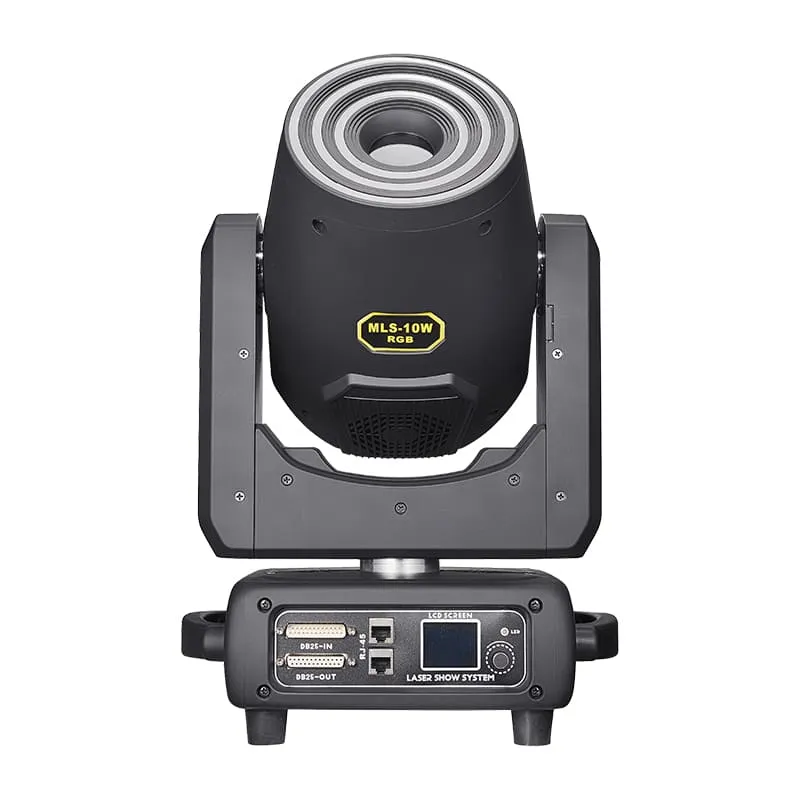
Core Performance Criteria for Concert Lighting Fixtures
Luminous Output and Beam Quality
Raw lumen output is often the first benchmark discussed when evaluating concert lighting fixtures, and for good reason. A fixture that cannot cut through haze, compete with ambient stage wash, or project a sharp beam to the back of a large venue will fail to deliver visual impact regardless of its other features. High-performance concert lighting fixtures in the 500W and above class are typically expected to produce tightly collimated beams with measurable field angles that remain consistent across zoom ranges.
Beam quality goes beyond brightness. The evenness of the field, the sharpness of gobo projection, and the precision of the optical system all contribute to what professionals call 'cleanness' — a quality that separates purpose-built stage fixtures from general architectural units. Concert lighting fixtures intended for touring and festival use must maintain this optical quality even as lenses and reflectors accumulate heat cycles and road vibration over time.
Zoom range is another critical output factor. Concert lighting fixtures that can shift from a tight 3-degree beam to a wide 50-degree wash in a single unit offer production designers enormous flexibility without requiring additional fixture categories on the rig. This versatility reduces truck weight, setup time, and overall equipment cost while maximizing creative options during the show.
Color System Performance
Color is where modern concert lighting fixtures differentiate themselves most dramatically. The shift from conventional gel-based color mixing to full CMY subtractive mixing systems, CTO (color temperature orange) correction, and advanced dichroic color wheels has redefined what is achievable on a live stage. A CMY system allows designers to dial in precise hues across a continuous spectrum rather than jumping between fixed gel positions, enabling smooth, gradual color transitions that feel organic rather than mechanical.
The addition of CTO correction within the same fixture body is particularly significant for concert lighting fixtures used in broadcast or streamed productions. Matching the color temperature of stage lighting to camera white balance is a technical requirement that used to demand separate correction units or complex gel layering. Fixtures with integrated CTO capability simplify this process and allow real-time adjustments during rehearsals and live broadcasts without interrupting the rig.
High-end concert lighting fixtures with combined CMY, CTO, and BSW (beam, spot, wash) capabilities in a single housing represent the current benchmark for color performance versatility. These units allow a single fixture to serve multiple roles across a production, reducing inventory requirements while maintaining the color precision that demanding productions require.
The BSW 3-in-1 Architecture and Why It Matters
Understanding BSW Functionality in Live Production
The beam, spot, and wash — collectively known as BSW — classification has become one of the most important performance standards in professional concert lighting fixtures. Historically, these were three distinct fixture types with separate optical systems, mechanical designs, and use cases. A beam fixture threw a tight, concentrated shaft of light. A spot fixture projected focused patterns and gobos. A wash fixture spread even, soft illumination across a wide area. Each required dedicated positions on the rig and separate programming channels.
The emergence of BSW 3-in-1 concert lighting fixtures changed this dynamic entirely. By engineering a single optical path that can transition between beam, spot, and wash modes through motorized lens and reflector adjustments, manufacturers created fixtures capable of performing all three functions within a single show or even within a single cue. This architectural innovation has been widely adopted in high-performance concert lighting fixtures because it directly addresses the practical constraints of touring production — weight limits, truck space, setup windows, and budget.
For production designers, BSW capability in concert lighting fixtures means creative freedom that was previously impossible without fielding a much larger rig. A ballad can begin with a wide, soft wash that transitions seamlessly into a tight beam effect as the song builds, then resolves into a mid-zoom spot for a focused key light moment — all from the same fixture without any physical reconfiguration.
Optical Engine Design in High-Performance Fixtures
The optical engine is the engineering heart of any high-performance concert lighting fixture. The quality of the source — whether a discharge lamp or LED module — determines the spectral character and raw output of the fixture. The lens train, consisting of multiple precision-ground optical elements, shapes that output into a useful beam with controlled field distribution and minimal aberration. The reflector geometry determines how efficiently light is gathered and directed, directly impacting both output and beam quality.
In concert lighting fixtures designed for BSW operation, the optical engine must perform across a wide range of configurations without sacrificing quality at either extreme. A fixture that produces an excellent tight beam but a patchy, uneven wash has not fully solved the BSW challenge. The best-performing concert lighting fixtures achieve consistency across all three modes because their optical path has been engineered holistically rather than optimized for a single function.
Thermal management within the optical engine is also a performance determinant. Concert lighting fixtures running at 500W or higher generate significant heat, and the ability to maintain stable color output and consistent optical performance across a full show requires sophisticated thermal design. Fixtures that exhibit color shift or output degradation during extended operation are a liability in professional production environments where repeatability is non-negotiable.
Mechanical Reliability and Road-Ready Construction
Pan and Tilt Performance Standards
Speed and precision in pan and tilt movement are defining characteristics of high-performance concert lighting fixtures. In fast-paced concert environments, fixtures must track movement, execute complex chases, and snap between positions with accuracy that holds up under DMX timing pressure. Pan ranges of 540 degrees and tilt ranges of 270 degrees have become standard for professional concert lighting fixtures, providing the movement envelope needed for aerial effects, audience blinders, and dynamic cross-stage sweeps.
The mechanical drive system — whether belt, gear, or hybrid — determines the character of that movement. Belt-driven systems tend to produce quieter operation, which matters in acoustic-sensitive performance environments. Gear-driven systems often deliver more torque and positional accuracy at high speeds. The best concert lighting fixtures balance these factors for their intended deployment context, and top-tier units offer fine-tuning options through DMX parameters to adjust speed curves and movement response.
Positional accuracy over time is a less-discussed but critically important performance metric. Concert lighting fixtures that develop mechanical play or positional drift after extended use become a programming liability — cues that were accurate on day one of a tour begin to look sloppy by week four. High-performance fixtures use precision encoder feedback systems to maintain positional accuracy regardless of mechanical wear, ensuring that the show looks the same on the last night as it did on the first.
Build Quality for Touring and Venue Use
Concert lighting fixtures intended for touring productions face a punishing operational environment. They are rigged, derigged, loaded into trucks, exposed to temperature swings between outdoor festivals and climate-controlled arenas, and subjected to the vibration of transport and the physical stress of multiple daily deployments. The construction quality of a fixture directly determines whether it survives this cycle intact and continues performing to specification.
High-performance concert lighting fixtures use die-cast aluminum housings that combine structural rigidity with weight efficiency. Connector quality — particularly for power and data — is a significant reliability factor, as intermittent connections in a touring environment are notoriously difficult to diagnose and can cause show-stopping failures at the worst possible moment. Internal cable management, PCB mounting security, and the quality of mechanical fasteners all contribute to long-term reliability under road conditions.
Dust and moisture ingress protection ratings matter for outdoor festival deployments. While most professional concert lighting fixtures are not designed for permanent outdoor installation, the ability to withstand incidental moisture from open-air events or the fine dust common in certain venue environments extends the operational range of a fixture and reduces maintenance frequency during demanding touring schedules.
Control Integration and Programming Flexibility
DMX Channel Count and Parameter Depth
Concert lighting fixtures must speak fluently with the control systems used in professional production. DMX-512 remains the foundation protocol, but the parameter depth available within a DMX profile significantly affects what a lighting programmer can achieve. High-performance concert lighting fixtures offer extended channel modes — sometimes exceeding 30 channels — that expose fine control over every aspect of the fixture including individual color parameters, prism selection and rotation, animation effects, iris position, strobe rate, and dimmer curve selection.
The availability of both basic and extended DMX profiles in the same fixture is a practical design feature that experienced programmers appreciate. Basic profiles reduce the control desk channel load during pre-programming when broad strokes are sufficient, while extended profiles allow granular control during technical rehearsals and live show refinement. Concert lighting fixtures that force operators to choose between simplicity and capability at the hardware level create unnecessary workflow friction.
RDM (Remote Device Management) capability has become an expected feature in professional concert lighting fixtures. The ability to query fixture status, read error logs, set addresses, and update software remotely from the control position dramatically accelerates setup and troubleshooting in complex multi-fixture rigs. For touring productions with tight changeover windows, RDM support in concert lighting fixtures is not a luxury — it is an operational efficiency requirement.
Onboard Effects and Macro Functionality
The internal effects engine of a concert lighting fixture determines how much creative power is available without requiring complex external programming. High-performance concert lighting fixtures include built-in macros for commonly used effects — color chases, movement programs, strobe patterns, and gobo rotations — that can be triggered and modified via DMX without demanding significant programming time from the operator. These onboard capabilities are particularly valuable in live events where improvisation or rapid adjustment is necessary.
Prism selection and combination options within the effects engine contribute to the visual vocabulary of concert lighting fixtures in beam mode. Single and dual prisms with variable rotation allow a single fixture to produce a wide range of visual textures, from the classic multi-beam fan effect to tightly wound spiral patterns. The quality of the prism optics — in terms of clarity, uniformity, and mechanical smoothness — directly affects how polished these effects look from the audience perspective.
Animation disc options in the effects wheel expand the organic texture options available from concert lighting fixtures, adding flowing, morphic projection effects that work particularly well through haze. The combination of animation discs with the full CMY color system creates effect combinations that would have required multiple specialized fixtures in previous generations of concert lighting fixtures, further consolidating rig complexity into fewer, more capable units.
Selecting Concert Lighting Fixtures by Production Scale
Large-Scale Arena and Stadium Productions
At the arena and stadium scale, concert lighting fixtures must contend with sightlines that extend 50 meters or more, ambient light from broadcast cameras and video walls, and audience sections that span vertical as well as horizontal distances. Under these conditions, raw output is the non-negotiable baseline. Only concert lighting fixtures in the high-wattage class — 500W and above — deliver the photometric performance needed to register visually at these distances and against competing light sources.
At this scale, the BSW versatility of high-performance concert lighting fixtures becomes a significant logistical asset. Arena productions typically fly large quantities of fixtures on multiple trusses, and the ability to assign a single fixture type to multiple visual roles — beam effects during the high-energy set, wash fill during intimate acoustic moments, spot for key lighting during speech or interview segments — simplifies the rig design, reduces the number of fixture types that crew must be trained on, and compresses the truck count for touring.
The concert lighting fixtures that consistently perform at this level share a common design philosophy: prioritize optical efficiency, build for mechanical endurance, and engineer the control interface for professional workflow integration. These are not compromises between competing priorities but coherent design decisions that reflect an understanding of what large-scale live production actually demands.
Theater, Festival, and Mid-Scale Touring Applications
Mid-scale touring, festival stages, and theatrical productions present a different performance matrix for concert lighting fixtures. Output requirements are somewhat lower than arena scale, but the emphasis on color accuracy, gobo quality, and smooth dimming curves increases significantly. Theatrical productions in particular demand concert lighting fixtures with exceptional dimmer linearity — the ability to dim evenly and smoothly from full to blackout without the stepped or flickering behavior that disrupts intimate dramatic moments.
Festival environments introduce weather exposure considerations that are less relevant in permanent venue installations. Concert lighting fixtures deployed on outdoor festival stages must maintain performance across a temperature range that can swing dramatically between afternoon setup and late-night show time. Thermal management systems that stabilize performance across this range, combined with appropriate ingress protection, distinguish fixtures built for festival deployment from those optimized exclusively for controlled indoor environments.
For mid-scale touring, the power consumption profile of concert lighting fixtures has increasing relevance as touring productions become more aware of energy consumption. Fixtures that deliver high output relative to their wattage draw — measured by their efficacy in lumens per watt — reduce generator requirements on festival sites and lower energy costs in permanent venues. High-efficiency optical designs in modern concert lighting fixtures have made meaningful progress on this metric without sacrificing the output levels that productions require.
FAQ
What makes a concert lighting fixture 'high performance' compared to a standard stage light?
High-performance concert lighting fixtures are distinguished by their combination of optical output, color system precision, mechanical reliability, and control depth. Standard stage lights may offer basic dimming and color through gel, while professional concert lighting fixtures provide CMY mixing, motorized zoom, programmable effects, and the mechanical endurance to sustain consistent performance across extended touring or residency schedules. The integration of BSW functionality in a single unit is a defining characteristic of top-tier concert lighting fixtures.
How does CMY color mixing improve performance in live concert applications?
CMY mixing in concert lighting fixtures allows continuous, smooth transitions between any hue in the visible spectrum without the stepped, jump-cut appearance of traditional color wheel systems. This capability enables lighting designers to create gradient transitions, precise color matching for broadcast applications, and real-time adjustments during live performances. Combined with CTO correction, CMY systems in concert lighting fixtures give operators full control over both hue and color temperature from a single DMX channel structure.
Can a single BSW fixture type replace multiple specialized fixtures on a concert rig?
In many production contexts, yes. Modern BSW concert lighting fixtures are engineered to transition between tight beam, focused spot, and wide wash functions within a single optical system. While a dedicated beam fixture optimized purely for tight aerial effects will have marginal output advantages in that specific mode, the operational and logistical benefits of deploying a single versatile fixture type — fewer spares, simpler training, reduced truck weight — make BSW concert lighting fixtures the preferred choice for most touring and festival applications.
What should production managers prioritize when evaluating concert lighting fixtures for a touring rig?
Production managers should prioritize mechanical reliability above all other factors, followed by photometric performance consistency across the fixture batch, control system compatibility with existing consoles, and serviceability in the field. Concert lighting fixtures that perform brilliantly on day one but require frequent maintenance after heavy road use create operational costs that outweigh their initial performance advantages. Evaluating total cost of ownership — including spare parts availability and mean time between failures — gives a more accurate picture of real-world performance than specification sheets alone.
Table of Contents
- Core Performance Criteria for Concert Lighting Fixtures
- The BSW 3-in-1 Architecture and Why It Matters
- Mechanical Reliability and Road-Ready Construction
- Control Integration and Programming Flexibility
- Selecting Concert Lighting Fixtures by Production Scale
-
FAQ
- What makes a concert lighting fixture 'high performance' compared to a standard stage light?
- How does CMY color mixing improve performance in live concert applications?
- Can a single BSW fixture type replace multiple specialized fixtures on a concert rig?
- What should production managers prioritize when evaluating concert lighting fixtures for a touring rig?