 EN
EN



Ground Fog Machine vs Standard Fog Machine for Wedding Effects
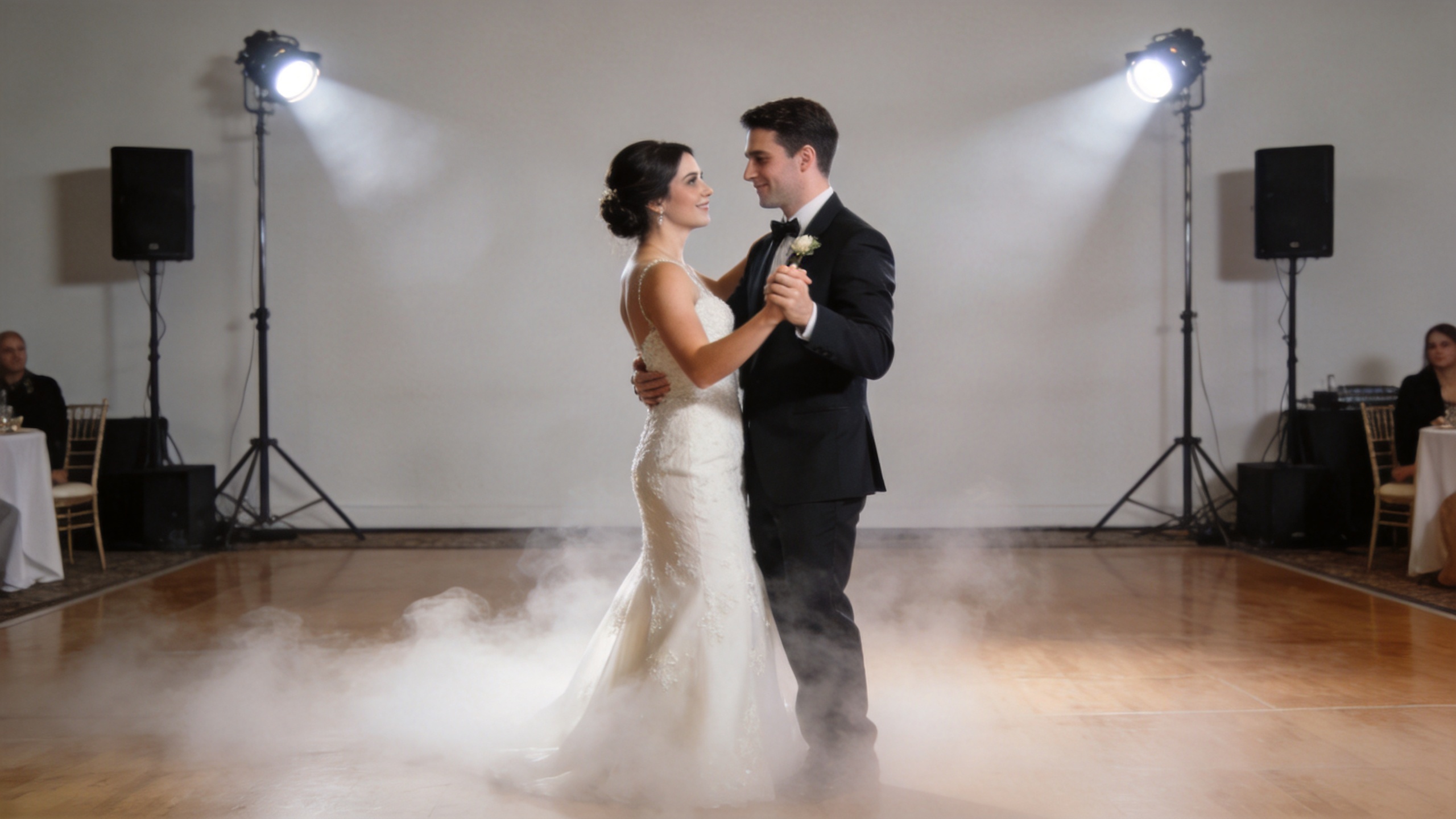
For a wedding entrance, first dance, or stage reveal, a fog machine can make lighting feel more dimensional. The important choice is not simply how much fog a unit can produce. It is whether the effect needs to stay close to the floor or remain visible in the air. A ground fog machine creates a low, cloud-like layer around the dance floor, while a standard fog machine sends fog into the room so it can catch beams, wash lights, and other stage lighting.
From a rental-equipment planning perspective, the appropriate option depends on the venue, the ceremony cue, the available setup time, and the people moving through the space. A fog machine that looks convincing in a product demonstration may behave differently once air conditioning, open doors, ceiling height, and lighting positions enter the picture.
The Visual Difference: Floor-Hugging Cloud vs Airborne Atmosphere
A ground fog machine is selected when the desired image is a dense layer that appears to sit at floor level. It is commonly used for a couple’s first dance, a grand entrance, or a short reveal where the floor itself becomes part of the visual composition. The goal is usually a soft cloud beneath the people on stage, not a room full of haze.
A standard fog machine creates fog that rises, disperses, and interacts with the room. This can make moving-head beams, backlight, and colored lighting easier to see. It can suit a live band, DJ set, stage performance, or party segment where the audience should notice the light paths as well as the atmosphere. In other words, low fog shapes the floor plane; standard fog shapes the volume of the room.
That distinction matters in wedding photography. A low layer can frame a couple without putting a visible veil between the camera and faces. Airborne fog can be dramatic, but if it is deployed too heavily or at the wrong moment, it may reduce facial clarity and soften background details. More fog is not automatically better; the usable level is the one that supports the planned shot and maintains a comfortable view of the dance floor.
How Venue Conditions Change the Result
Before choosing a fog machine, walk the venue rather than judging only from a floor plan. Observe supply vents, doors, fans, and the path between the machine and the dance area. Low fog is especially sensitive to air movement: a cross-draft can push the layer away from the intended location or break it into uneven patches. Standard fog is also affected by airflow, but its purpose is often to spread through the room, so controlled dispersion may be acceptable.
Ceiling height matters too. In a tall ballroom, a standard fog effect may dissipate before it gives the desired density around the lighting. In a compact room, the same approach can accumulate quickly. For ground fog, confirm whether the floor surface, stage edge, and guest traffic allow a clear deployment zone. A long dress, cables, photographers, and children near the dance floor all affect where equipment can be positioned.
Ventilation and venue procedures should be checked early. Ask the venue which effects are permitted, whether smoke or heat detectors require coordination, and which operating conditions they expect suppliers to follow. This article is a selection guide, not a substitute for the equipment instructions or local venue requirements.
Comparison Table for Wedding Planning
| Decision factor | Ground fog machine | Standard fog machine |
|---|---|---|
| Primary visual goal | A cloud-like layer near the dance floor | Atmosphere and visible light beams in the room |
| Typical wedding moment | First dance, entrance, short reveal | Party segment, DJ set, stage performance |
| Airflow sensitivity | High: cross-drafts can move or split the floor effect | Important: airflow influences spread and clearing time |
| Lighting relationship | Complements floor-level scenes and silhouettes | Helps define beams and aerial lighting texture |
| Planning priority | Clear deployment area and a controlled cue | Room volume, visibility, and controlled release timing |
These are planning differences, not guarantees. Actual performance depends on the specific equipment, approved fluid or consumables, ambient conditions, and operator setup.
Operational Considerations That Are Easy to Miss
First, confirm the control plan. A first-dance effect often needs a precise start and stop rather than continuous output. Establish who will call the cue, where that person will stand, and how the operator can see the dance floor. The equipment should be tested during setup, not for the first time after guests arrive.
Second, check the preparation routine in the product documentation. Preheat requirements, consumable compatibility, power arrangements, and cleaning recommendations should be confirmed for the exact model. If a result looks uneven, do not assume the fog machine is at fault. Check airflow, placement distance, fluid compatibility, and the timing of the release before changing the entire plan.
Third, look at the effect from the audience and camera positions. The same amount of fog can look completely different under warm uplighting, narrow beams, or a bright front wash. Viewing from the dance floor alone is not enough; walk to the photographer’s likely position and the guest seating area before the event begins.
Choosing the Right Option for Your Wedding Brief
Choose a ground fog machine when the brief calls for a floor-hugging cloud, a visually clean first-dance frame, and a short, carefully managed special-effect cue. If you are evaluating a dedicated option, review the 3500W Ground Fog Machine alongside the venue requirements and the event operator’s workflow. Confirm the current product documentation for setup details before booking or deployment.
Choose a standard fog machine when the visual priority is aerial texture for lighting, a broader party atmosphere, or a stage moment that benefits from visible beams. It may be the more flexible choice for a performance-oriented reception, provided the venue allows it and the operator can control output conservatively.
If the event needs both looks, treat them as separate effect goals. Plan the floor effect for the first dance and the airborne atmosphere for a later performance segment, then review the transition with the venue and lighting team. That approach is usually more reliable than trying to make one fog machine serve every visual purpose.
Final Pre-Event Checklist
- Define whether the target is floor-level cloud, visible light beams, or two separate moments.
- Confirm venue approval, ventilation conditions, detector procedures, and operator access.
- Inspect air movement from HVAC, doors, and nearby fans during the setup window.
- Test the cue from camera and guest viewpoints, not only beside the equipment.
- Use the approved consumable and follow the exact model’s preparation and cleaning instructions.
- Keep cables, equipment placement, and guest movement routes clearly separated.
The practical answer is simple: use a ground fog machine for a controlled, floor-level wedding cloud, and use a standard fog machine for room-wide atmospheric texture. Make the final selection after the venue walkthrough, because the event environment—not the name of the machine alone—determines whether the effect feels polished.