 EN
EN



How to Select a 500W Moving Head Light for Touring Shows
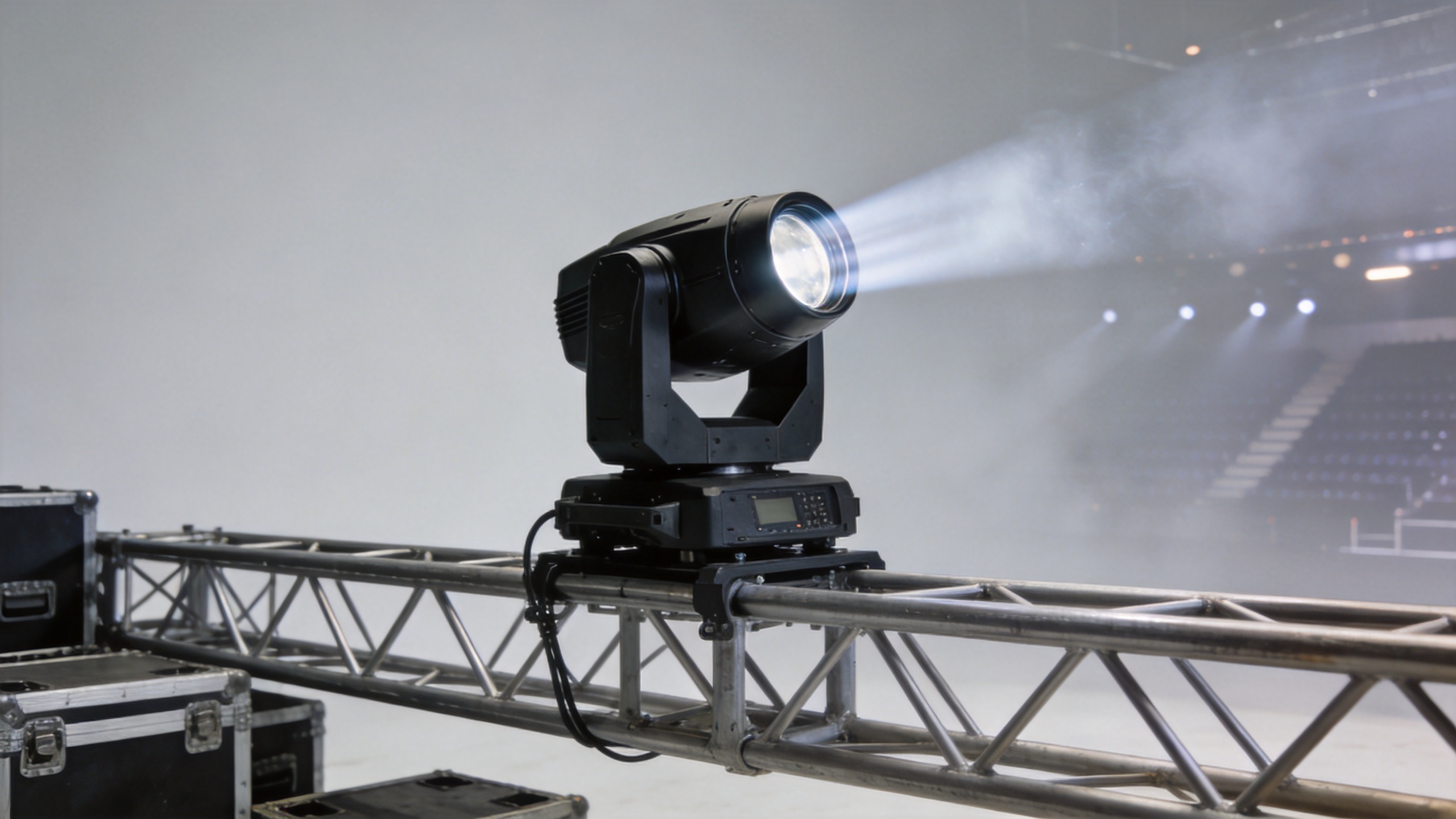
A touring fixture is not chosen from a specification list alone. It has to produce a convincing look at different trim heights, fit the truck pack, integrate with the control system, and remain practical for crews working to a tight changeover. For a moving head beam, that means starting with the show design and operating conditions—not with wattage as a shortcut for quality.
From a distributor-facing selection perspective, the useful question is: what information would let a production team recommend a fixture repeatedly across venues? A 500W class fixture may suit a tour that needs visible aerial effects and flexible looks, but the right answer depends on throw distance, rigging limits, power distribution, and the role the fixture must play in the rig.
Start With the Job of the Moving Head Beam
A moving head beam is normally selected to create a concentrated aerial effect, define a stage picture, or cut through haze over distance. A narrow beam is not automatically the answer—more precisely, it depends on the intended throw, the level of ambient light, and how the beam will layer with wash and spot fixtures.
Before comparing 500W options, create a short role brief for each fixture position:
- Long-throw aerial role: identify the farthest audience or scenic sightline the fixture must reach.
- Texture and transition role: decide whether rotating gobos, prisms, color mixing, or framing will be needed for cues between songs.
- Hybrid role: determine whether one fixture must cover beam, spot, and wash duties to reduce truck space or fixture count.
- Camera role: check whether narrow beams, color choices, and movement speeds will support the broadcast or IMAG plan.
Search results for this category commonly group beam, spot, wash, and hybrid fixtures together. That is useful for discovery, but it can blur the touring decision. Put the required role first, then verify whether a given moving head beam can deliver it at the venue sizes on the itinerary.
Validate Optics Against Real Touring Distances
Touring productions rarely get identical room geometry every night. Trim height, stage depth, and FOH position can change sharply between theatres, arenas, tents, and outdoor sites. Instead of asking whether a 500W moving head beam is “bright enough,” map its beam angle and zoom behavior against three representative venues: the shortest throw, the typical show, and the longest throw. This is the point at which a moving head beam moves from a catalogue candidate to a fixture that can be tested against the actual itinerary.
Ask the manufacturer or supplier for photometric information that matches the actual mode you intend to use. A fixture can behave very differently with a tight beam, a wider field, a prism, a gobo, or color mixing engaged. The practical verification sequence is simple:
- Record throw distance and expected trim height for each reference venue.
- Define the visual target: a narrow aerial shaft, a scenic breakup, a projected gobo, or a broader layer.
- Compare published beam-angle and output information in the relevant mode.
- Schedule a pre-tour test where the fixture can be viewed through the intended haze level.
Do not assume a desired effect will appear as expected before confirming height, distance, haze, and sightlines. This check often prevents a fixture from being specified for a dramatic long-throw beam and then used mainly as a general-purpose mover.
Compare a 500W Hybrid Fixture With a Dedicated Beam
The choice is often between a flexible beam-spot-wash fixture and a dedicated beam model. Neither approach wins in every touring design. Use the same criteria for both so the decision remains tied to the show rather than a headline feature list.
| Selection criterion | 500W hybrid approach | Dedicated beam approach |
|---|---|---|
| Visual coverage | Can support several look types when its confirmed optical range fits the brief. | Focuses the rig on a specific aerial-beam role. |
| Fixture count | May simplify a mixed-role package where flexibility is more important than specialization. | May require complementary spot or wash fixtures for texture and coverage. |
| Programming | More attributes can offer more creative options, but require disciplined cue and mode planning. | A tighter role can make repeatable programming simpler. |
| Touring verification | Confirm the behavior of each required mode, not only the headline output. | Confirm that the dedicated beam remains useful at short as well as long throws. |
For teams evaluating a three-in-one category, the AICPOSE 500W CMY CTO BSW 3in1 Moving light is a relevant product category to review against the show brief. Treat the product page as a source for confirmed documentation and compare it with your required modes, crew workflow, and venue plan rather than assuming capabilities beyond the published details.
Make Transport, Rigging, and Power Part of the Specification
A touring moving head beam is also a logistics decision. The fixture must work with the cases, truss system, hoists, cable paths, and local power available at each stop. Search data in this area highlights broad fixture-weight ranges, but that is only a reminder to verify the actual unit weight, mounting hardware, and permitted truss loading from the official documentation.
- Transport: confirm flight-case dimensions, total packed weight, caster arrangement, and the number of units per truck position.
- Rigging: verify fixture weight, approved clamps, safety attachment points, orientation limits, and the calculations used by the rigging team.
- Power: use the fixture’s stated electrical data to build a distribution plan; do not substitute lamp wattage or nominal class for actual consumption.
- Thermal conditions: review ventilation clearances, outdoor exposure limits where relevant, and the time needed for safe handling after a show.
Many moving fixtures are designed for wide regional input-voltage ranges, but this is not universal. It may be worth checking the exact label and manual early, especially when a routing crosses 120V and 230V territories. The same principle applies to connectors, breaker loading, and power-link limits.
Check Control, Addressing, and System Compatibility
A strong optical choice can still slow a tour if it complicates the control package. Confirm the available control modes, channel count, addressing plan, fixture profile availability, and the behavior of key attributes such as dimming, color, zoom, gobo, prism, and movement. DMX512 is common in the category, but the production should validate the exact implementation and any network requirements for its own system. For every moving head beam position in the rig, document the required mode and profile before rehearsals so the fixture’s creative range does not become an addressing or troubleshooting burden.
Build a programming checklist before the first rehearsal:
- Load the tested fixture profile into the show file and confirm attribute mapping.
- Set a consistent mode across all matching fixtures where the design allows.
- Test home position, pan/tilt limits, reset behavior, and recovery after power cycling.
- Program service-friendly positions that let technicians access fixtures safely.
- Document addresses, universe allocation, spare units, and any mode-specific notes in the touring pack.
This process turns the selection from a catalogue comparison into a system decision. It also reveals whether a flexible moving head beam is adding useful creative range or unnecessary operating complexity.
Use a Pre-Purchase Test That Mirrors the Tour
The most reliable final check is a controlled test with representative conditions. Assemble one moving head beam with the intended console, haze, rigging height, cable runs, and a practical power arrangement. Run the visual looks that matter most, then include handling tasks: casing, lifting, mounting, addressing, focusing, and resetting. A well-planned moving head beam test should reveal whether the optical look and operational workflow remain credible when the fixture is used as crews will use it on the road.
Score each candidate against the same tour-ready questions:
- Does it create the required beam look at the shortest and longest reference throws?
- Are the optical modes and effects useful for the actual cue list?
- Can the crew transport, rig, patch, and service it within the production schedule?
- Does the confirmed power and control data fit the system plan?
- Is the supplier able to provide current manuals, fixture profiles, spare-parts guidance, and support information?
Choose the Fixture That Reduces Compromise Across the Itinerary
A 500W moving head beam can be a sound touring choice when its documented optical modes, power requirements, rigging data, and control options match the show’s real constraints. The better purchasing decision is not necessarily the fixture with the longest feature list. It is the one that meets the visual brief while keeping every night’s loading, programming, and safety checks manageable. When reviewing a moving head beam, ask the supplier to confirm the exact configuration being quoted rather than comparing a generic category description.
Start with the most demanding venue, validate the required looks in a representative test, and write the operational assumptions into the tour pack. That approach gives designers, rental partners, and technical crews a clearer basis for selecting a fixture that can travel well and perform consistently.