 EN
EN



Outdoor Waterproof PAR Lights: What IP65 Means for Events
Outdoor events put PAR lights in a different operating environment from a dry ballroom or theatre. Rain can arrive during load-in, dust can rise from a festival field, and a fixture may stay on a truss long after the weather changes. For planners, rental teams, and operators, an IP65 label is useful—but only when it is read as a practical boundary rather than a blanket promise that every part of a lighting system can get wet.
From a field-operator perspective, the starting point is simple: match the protection level to the venue, the mounting position, the cable route, and the show schedule. PAR lights can create a flexible outdoor wash, but a successful setup also needs protected power distribution, sound cable practices, secure mounting, and a clear weather response plan.
What IP65 Actually Says About PAR Lights
IP stands for Ingress Protection, a classification used to describe how an enclosure resists dust and water intrusion. The two digits matter. In an IP65 fixture, the 6 indicates a dust-tight enclosure under the applicable test conditions. The 5 indicates protection against water jets. In plain event language, an IP65 PAR light is designed for exposure such as wind-driven rain or cleaning-style water spray from different directions—not for immersion in water.
That distinction is important. “Waterproof” is often used informally, but IP65 does not mean a light can be submerged, installed in standing water, or left with an open connector facing upward. It also does not automatically extend the same rating to every connector, extension cable, controller, power source, or piece of mounting hardware around the fixture.
More accurately, the rating helps a properly installed enclosure resist the kinds of dust and weather exposure that are common in outdoor stage lighting. It does not replace the manufacturer instructions, local electrical requirements, or a site-specific safety check.
Why IP65 Matters at Outdoor Events
For an outdoor show, weather protection affects more than whether a fixture keeps producing color. It affects uptime, inspection workload, and how confidently a crew can respond when conditions change. IP65 PAR lights are especially relevant for applications such as architectural uplighting, stage backwash, tent-edge color, entrance lighting, and festival-area accents where the fixtures may be exposed to rain and airborne dust.
The value is strongest when the enclosure rating matches the real exposure. A covered stage with occasional wind-blown rain is different from a beachfront installation with salt-laden air, and both are different from a fixture positioned close to pooled water. Before choosing a unit, identify whether the fixture faces the sky, sits at ground level, is exposed to audience spills, or will be moved repeatedly between indoor and outdoor jobs.
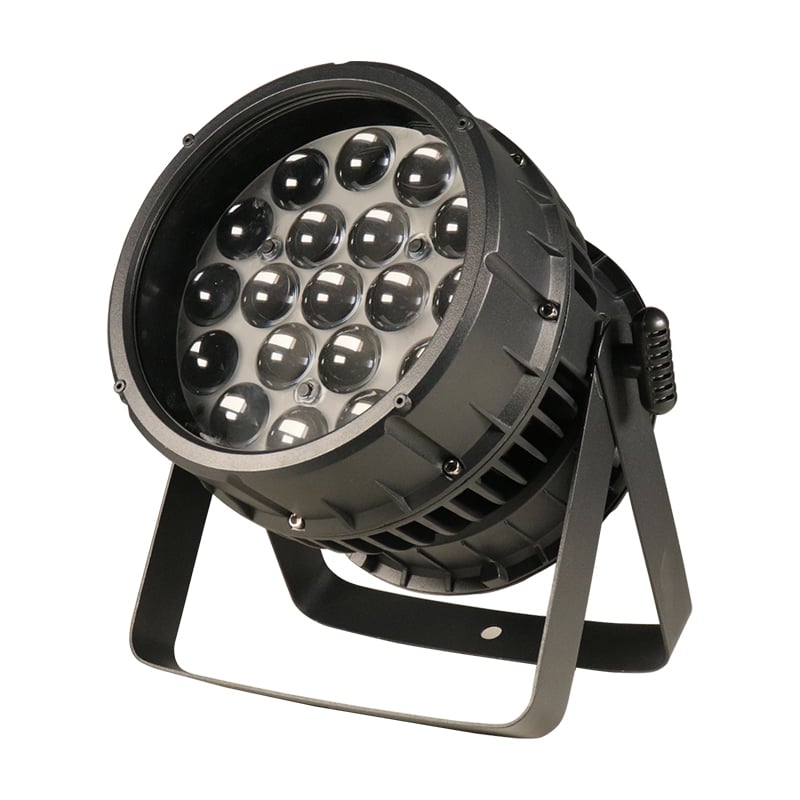
For example, the AICPOSE IP65 19×15W Zoom PAR Light | Outdoor Waterproof RGBW Wash is a product option whose official title identifies it as an IP65 outdoor waterproof RGBW wash fixture. Teams should still confirm the current product documentation, connector arrangement, and installation instructions before a specific deployment.
IP65 Is an Enclosure Rating, Not a Complete Rain Plan
A common mistake is to treat one fixture rating as approval for the entire lighting line. In reality, outdoor reliability depends on the weakest exposed component. If a weather-rated light is connected to an unprotected power strip, a wet extension junction, or an improperly managed data connection, the system still has a vulnerability.
| Check area | What to verify before doors open |
|---|---|
| Fixture position | Keep the housing oriented and mounted as the manufacturer specifies; avoid positions where water can collect around connectors. |
| Power and data | Confirm that cables, joins, distribution equipment, and control accessories have suitable protection for their actual exposure. |
| Ground conditions | Keep equipment and connections out of standing water; route cables to reduce trip hazards and physical damage. |
| Mounting | Use the specified clamps, safety attachments, and load practices; weather resistance does not change rigging requirements. |
| Weather response | Define who pauses operation, isolates power, or reinspects equipment if rain intensity, wind, or flooding changes. |
Think of the rating as one layer in a system. The practical question is not merely “Are these LED PAR fixtures IP65?” It is “Can this complete installation remain protected and inspectable for the conditions we expect today?”
Where IP65 PAR Lights Fit Well—and Where They Need Extra Care
IP65 PAR lights can be a sensible starting point for temporary outdoor events that need durable color wash without assuming calm, dry conditions. They are often considered for outdoor ceremonies, concert stages, venue façades, trade-show entrances, and rental inventories that move across different sites.
However, the intended exposure still matters. A fixture close to a sprinkler zone, beside a pool edge, below an eave that concentrates runoff, or in a low point where water accumulates needs an additional review. So does a job with unusually fine dust, salt spray, severe wind, or long unattended operation. If the application goes beyond ordinary rain-and-dust exposure, compare the required protection level and operating conditions against the manufacturer documentation rather than assuming that IP65 covers every environment.
This is where the wording of a specification matters. “Weather-resistant for event use” may be a useful direction, but it is not a substitute for reviewing the exact fixture, accessories, and installation method. If venue conditions change substantially, reassess the setup instead of relying on a decision made during a dry site visit.
A Simple Outdoor Lighting Checklist for Event Teams
- Map exposure zones. Mark which PAR lights are under cover, fully exposed, near foot traffic, or close to drainage paths.
- Match the complete chain. Review the fixture enclosure, power connectors, data connections, cable joins, and distribution equipment together.
- Inspect before energizing. Look for damaged seals, loose caps, cracked housings, pinched cables, and water around connections.
- Plan for change. Agree on the weather threshold that triggers a pause, power isolation, cover adjustment, or equipment inspection.
- Inspect again after rain. When conditions allow, follow the equipment guidance and site procedures before returning affected gear to service.
For rental and production teams, this repeatable routine can be more valuable than simply choosing a higher IP number. It turns a product specification into an operating process.
Questions Event Teams Ask About IP65 PAR Lights
Can IP65 PAR lights stay outside during rain?
IP65 PAR lights are intended to resist the dust and water exposure described by their enclosure rating, but the complete answer depends on the installation. Confirm the manufacturer’s operating instructions, keep compatible connectors protected, and do not treat IP65 PAR lights as submersible equipment. A weather change that creates standing water, damaged cabling, or uncontrolled runoff requires a new inspection.
Do all LED PAR accessories have the same weather protection?
No. A fixture marked IP65 does not make an entire PAR LED system IP65. Check the rating and approved use of each power connector, data lead, splitter, controller, power distribution unit, and cable join. In a temporary build, the connections between LED PAR fixtures can be more exposed than the fixtures themselves, so cable routing and raised connection points deserve deliberate attention.
How should teams decide whether they need a higher IP rating?
Not automatically. Higher protection can be appropriate when the real exposure requires it, but event teams should compare the actual rain, dust, location, maintenance, rigging, and control requirements. A well-planned deployment of IP65 PAR lights with protected accessories may be more appropriate than selecting a rating by number alone. The aim is a complete, documented lighting plan—not a shorthand claim that any outdoor PAR LED fixture can handle any weather.
During load-in, use the same decision process for every group of PAR lights: note the exposure zone, confirm the housing condition, protect the connection path, and assign responsibility for weather monitoring. Before a show, test each LED PAR fixture in its intended control position. After rain, check the complete line before re-energizing. This routine helps crews get the benefit of IP65 PAR lights without turning an enclosure rating into an unrealistic promise.
Choosing Outdoor PAR Lights with the Right Expectations
A suitable choice depends on the event environment, desired wash coverage, control plan, mounting method, and how often the fixtures will travel between venues. IP65 is a meaningful criterion because it addresses dust-tightness and water-jet protection at the enclosure level. Yet it should be evaluated alongside product documentation, local requirements, electrical protection, and the rest of the installation.
For an awareness-stage decision, start with the actual exposure instead of a generic “outdoor” label. When the venue, cables, connectors, and weather plan are aligned, IP65 PAR lights can support a more resilient event lighting setup. When those surrounding conditions are not controlled, the fixture rating alone cannot make the system safe or suitable.