 EN
EN



PAR Can vs LED PAR Light: Which Fixture Should You Choose?
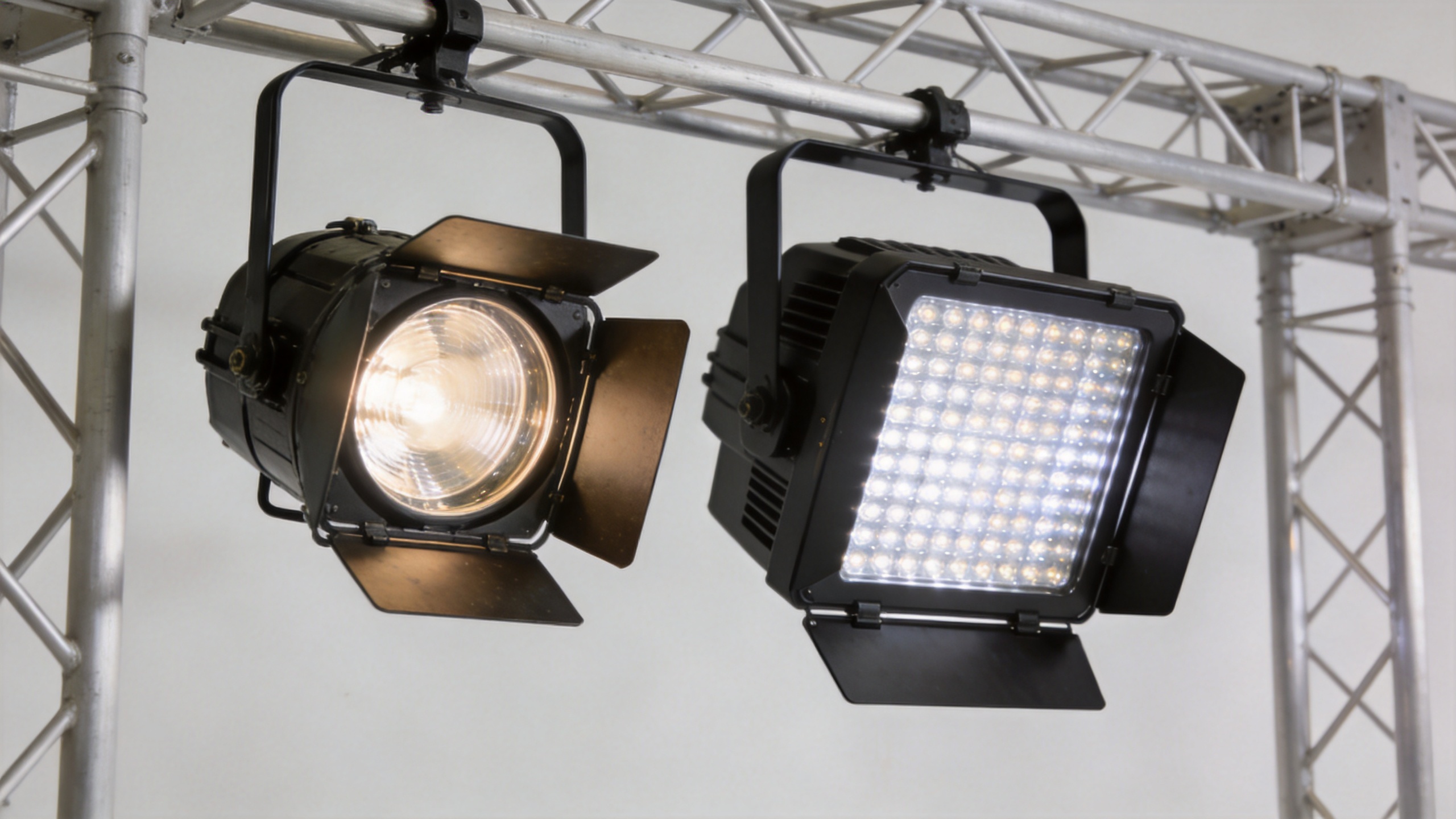
For a venue, rental fleet, or installation project, choosing a par can light is no longer simply a matter of picking a familiar housing. The practical decision is usually between a traditional lamp-based PAR can and an LED PAR fixture. Both can create a useful stage wash, backlight a performer, or add color to architectural features, but they behave differently in power draw, color mixing, heat, control, maintenance, and purchase planning.
The right answer depends on the room, the rig, the operating schedule, and the look you need to repeat. A traditional fixture can still be appropriate where a specific lamp character or an existing inventory matters. In most new builds and frequent-use applications, however, LED fixtures deserve close evaluation because their operating profile is different—not automatically better in every detail, but often better aligned with modern control and maintenance needs.
Start with the job, not the fixture label
A par can light is a broad stage-lighting category rather than one fixed specification. Traditional PAR cans generally use a separate incandescent or halogen lamp, reflector, and lens. LED versions integrate LED emitters and optics into the housing. Before comparing them, write down four project inputs: throw distance and coverage area, desired white and color appearance, control method, and expected hours of use.
This first step avoids a common purchasing mistake: comparing wattage alone. Light output, beam field, lens choice, dimming behavior, and the visual target all affect whether a fixture is suitable. If a rental company needs fast, repeatable color changes across multiple events, its priorities may differ from a theatre that wants a familiar tungsten response. If the installation is outdoors, environmental protection and cable routing may matter as much as color.
Energy use and heat: evaluate the whole operating picture
When comparing a par can light installation, energy use is often the clearest dividing line. Supplier comparison material commonly places older incandescent PAR lamps in a roughly 250 W to 1,000 W range, while many LED PAR fixtures operate at substantially lower input power. That does not mean any low-wattage LED replaces any high-wattage lamp-based fixture. Optics, beam angle, emitter design, and required brightness must be checked model by model.
Still, for long operating schedules, lower input power can reduce electrical load and the heat released into the room. That can influence circuit planning, air-conditioning demand, and the comfort of performers or guests near the stage. A lower-heat fixture may also be easier to position in compact décor or uplighting layouts. Ask for actual power consumption and photometric data for the proposed model rather than relying on a generic equivalent-wattage claim.
Color, white light, and visual character
Traditional par cans often produce the warm, continuous-spectrum character associated with tungsten or halogen lamps. With color media, they remain a familiar option for designers who already know how a particular gel, lamp, and beam size will read onstage. The trade-off is that changing colors requires physical media or a different fixture arrangement, and lamp color temperature can shift as the lamp is dimmed.
An LED par can light can mix color electronically, allowing operators to call up washes and transitions without changing gels. RGB, RGBW, RGBA, and other emitter combinations are not interchangeable, though. They influence white-light quality, saturated-color rendering, and the available pastel range. For a client presentation, compare the actual colors and white presets in the target venue whenever possible. A fixture that looks good in a showroom may need different settings against a particular backdrop, haze level, or camera system.
Control and integration: look beyond “DMX included”
Many par led fixtures offer dimming curves, color macros, and multiple DMX personalities. DMX512 is the protocol used to address fixture channels and coordinate show cues, but a compatible connector does not make two fixtures operationally identical. Channel count, addressing, dimmer resolution, refresh behavior, and available control modes should all be reviewed before buying a quantity.
For a small bar or mobile setup, standalone programs or sound-active modes can be useful. For a venue, rental package, or touring system, consistent fixture personalities and a tested console workflow are usually more valuable. Check whether the LED fixture can coexist with the existing dimmer, data distribution, and show-file conventions. Traditional lamp-based PAR cans may fit an established dimmer-based rig naturally, while LED fixtures normally need constant power plus data rather than a dimmed mains circuit.
Maintenance, spares, and lifecycle cost
With a traditional par can light, lamps and gels are routine consumables. Replacement is straightforward for crews familiar with the system, but lamp failures, handling time, heat, and ongoing consumable cost should be budgeted. A legacy inventory can make this route sensible for occasional use or for productions that deliberately need its established look.
LED fixtures usually reduce routine lamp changes, but they should not be treated as maintenance-free. Fans, connectors, lenses, seals, and electronics still need inspection, particularly in rental and outdoor work. Ask suppliers about service access, spare-part availability, firmware support where applicable, and the process for a fixture failure. A lower energy bill does not offset a difficult service situation if a fleet cannot be repaired quickly.
Where each option tends to fit
| Project condition | Traditional PAR can may fit | LED PAR light may fit |
|---|---|---|
| Existing rig | You already own compatible dimmers, lamps, and gels. | You are upgrading power/data infrastructure or adding a separate LED system. |
| Operating hours | Occasional use where lamp replacement is manageable. | Frequent or extended operation where electrical load and heat matter. |
| Color workflow | A fixed palette or a known gel-based design is sufficient. | Multiple colors, rapid changes, and repeatable presets are required. |
| Venue conditions | Indoor use with established handling procedures. | Projects that need an appropriately rated fixture for the actual environment. |
| Buyer priority | Familiar visual character and use of existing inventory. | Flexible control, lower routine lamp handling, and modern installation planning. |
For an outdoor par led wash-lighting requirement, review the actual protection rating, zoom range, color system, and control specification—not merely the fact that the fixture is LED. For example, the product information available for AICPOSE IP65 19×15W Zoom PAR Light | Outdoor Waterproof RGBW Wash identifies it as an outdoor waterproof RGBW wash fixture; buyers should still confirm current technical documentation and suitability for their site before specifying it.
A practical buying checklist
- Define the visual task. Is the goal a front wash, uplight, backdrop color, beam accent, or an outdoor architectural wash?
- Compare each par can light on the same basis. Request photometric files or measured data at the required beam angle and throw.
- Map power and control. Identify constant-power circuits, dimmer circuits, DMX runs, addresses, and backup needs.
- Test par cans and par led color and dimming. View the candidate par can light against your surfaces, cameras, and other fixtures.
- Price the lifecycle. Include lamps, gels, electricity, servicing, spares, and downtime—not just unit price.
- Verify site conditions. Confirm mounting, ventilation, cable management, ingress protection, and applicable local requirements.
So, traditional PAR can or LED PAR?
Choose a traditional par can light when its lamp character, familiar gel workflow, and compatibility with an existing rig are central to the project. Choose an LED PAR light when electronic color mixing, flexible control, lower operating load, reduced routine lamp replacement, or environment-specific fixture options support the way the system will actually be used.
The most reliable choice is not a blanket “LED wins” rule. It is a documented comparison of the intended look, verified output, control workflow, operating hours, and service plan. For buyers evaluating a new par can light package, that process creates a more defensible specification and a setup that is easier to operate after the initial purchase.