 EN
EN



Professional Concert Lighting: Choosing Wash, Beam, and Spot Effects
Professional concert lighting is not a choice between three interchangeable fixture labels. For professional concert lighting teams, it is a decision about visual jobs: filling the stage with color, carving aerial energy through the room, and placing readable shapes where the audience needs a point of focus. For a touring or rental team, a more useful first question is not “Which moving head fits the brief?” but “What should the audience notice at each musical moment?”
That question turns a fixture list into a lighting system. Wash, beam, and spot effects overlap in modern moving-head ranges, but they produce different visual priorities. A balanced rig normally uses them as layers. The right mix depends on room size, trim height, sightlines, ambient light, haze availability, control workflow, and the tempo of the show—not on a single headline specification.
Start with the visual task, not the fixture name
Professional concert lighting planning is clearer when every fixture family has a defined role. A wash layer creates the color field around performers and scenery. A beam layer creates narrow, directional lines that can travel through the air. A spot or profile-style layer gives designers a more defined field, projected texture, or a visual anchor on stage. Once these roles are clear, fixture selection becomes easier to explain to a producer, programmer, and rental manager.
From the audience area, a beam effect may look powerful because it creates depth overhead and beyond the stage. More accurately, that effect depends on viewing angle, contrast, and atmospheric conditions as much as the fixture itself. Similarly, a wash may appear simple in a fixture test but become the element that makes costumes, backline, and scenic surfaces feel connected in a live show.
| Effect family | Primary visual job | Most useful concert moments | Key question before specifying |
|---|---|---|---|
| Wash | Broad color coverage and atmosphere | Song-wide looks, audience washes, scenic color changes | What area needs even color and how much flexibility is needed? |
| Beam | Narrow aerial lines and kinetic impact | Builds, drops, transitions, high-energy cues | Will haze, trim height, and audience sightlines reveal the beam cleanly? |
| Spot | Defined field, projection, texture, or focus | Feature moments, gobo looks, scenic breakup, artist emphasis | Where does shape control matter more than broad coverage? |
Use wash effects to establish color, scale, and continuity
Wash fixtures are the foundation when the goal is to make a performance space feel intentional rather than fragmented. Their broad fields can connect the stage, side truss, back wall, and audience into one palette. In professional concert lighting design, that continuity is especially valuable during songs with long builds, slower transitions, or strong art-direction colors.
A wash is not automatically the “soft” choice. Saturated color, pixel effects, movement, and layered positions can make it energetic. The practical limitation is coverage planning: check throw distance, beam spread, fixture spacing, obstructions, and whether performers need a separate front-light solution. If the venue changes frequently, build a repeatable focus plan rather than assuming the same positions will work everywhere.
For production teams, start by mapping the surfaces that need color. Is the priority the band, the upstage scenic plane, the room, or all three? A wash that only reaches the deck may leave the camera image flat; a wash that is too broad can reduce contrast during a featured cue. The answer is usually a layered design, not an all-or-nothing choice.
Choose beam effects when direction and rhythm must read in the room
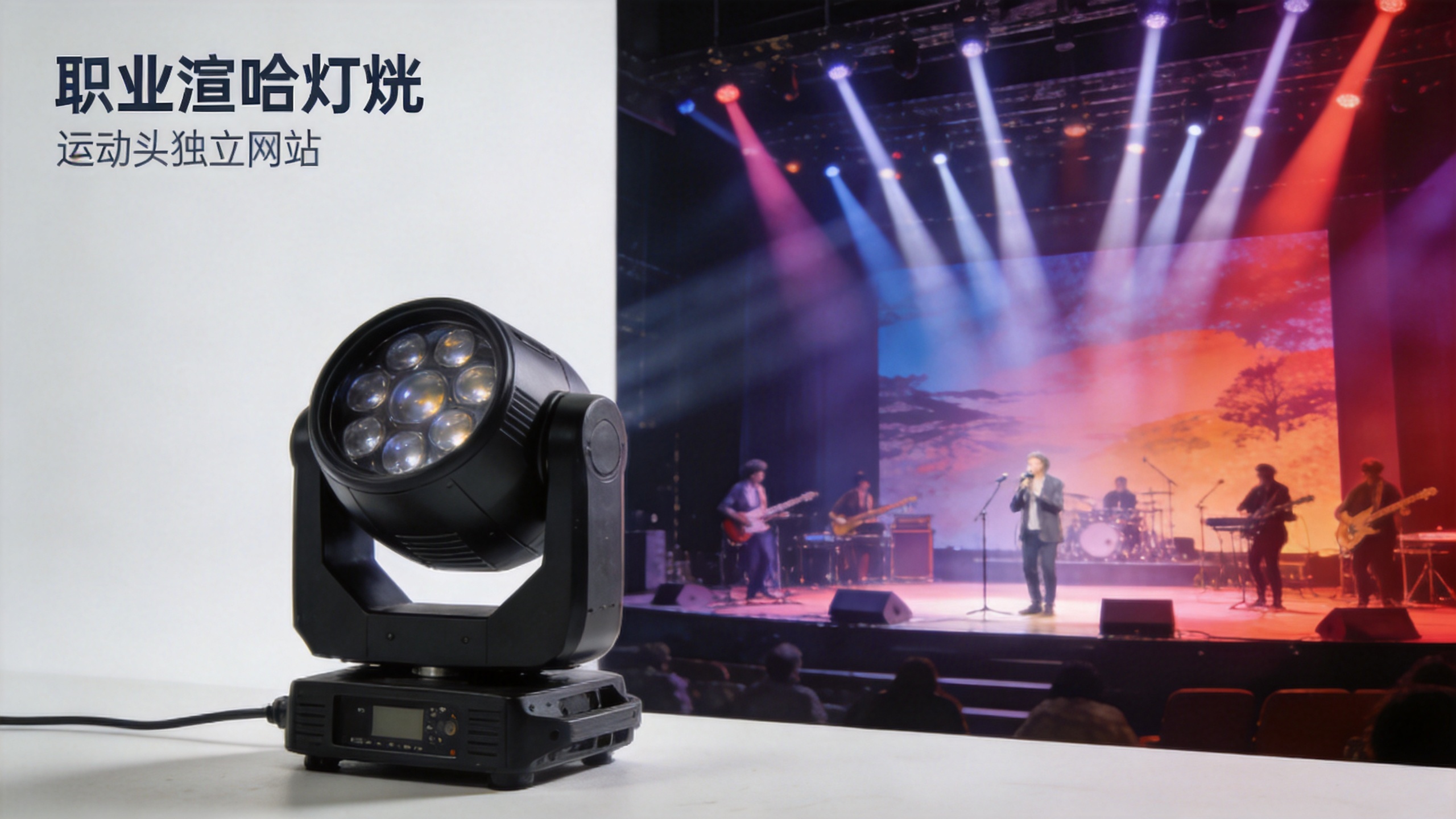
In professional concert lighting, beam fixtures earn their place when the show needs visible geometry: fast fans, tunnels, crossing lines, and sharp aerial punctuation. They are often most effective as a contrast layer above a wash field. During a chorus, for example, a stable color environment can support moving beam patterns without asking every fixture to do the same job.
However, a narrow beam does not read the same way in every venue. Its readability changes with ambient light, haze, viewing direction, and the distance between fixture and audience. Before committing a professional concert lighting plan to a beam-heavy approach, observe the room from the audience positions that matter most. Also confirm how haze will be managed and operated under venue rules; chasing a denser aerial look must remain secondary to site requirements and equipment instructions.
Control planning matters too. More detailed movement, color, and timing options can mean more pre-show preparation. Decide whether the show needs a small number of repeatable beam looks or a highly programmed cue stack, then choose fixtures and console resources accordingly. A clean, repeatable fan may serve a touring set better than a complicated look that cannot be rebuilt reliably at the next stop.
Bring in spot effects for focus, projection, and visual storytelling
Professional concert lighting gains definition from spot effects. They can create a tighter field, put texture on a backdrop, or direct attention to a specific part of the stage. This makes them useful when a concert needs visual storytelling rather than only color and movement. A spot-based layer can also bring contrast to a large wash scene by breaking up an otherwise uniform background.
When evaluating spot capability, think in terms of the result you want to see: a crisp projected shape, a readable gobo pattern, a controlled special, or a focused visual accent. Then confirm the optics, focus range, projection distance, and control features in the current product documentation. A fixture demonstration is helpful, but it is not the same as verifying a full concert look at the actual trim height and throw distance.
For a multifunction option, the confirmed product record includes the AICPOSE 500W CMY CTO BSW 3in1 Moving light. It can be a useful starting point for discussing a beam-spot-wash approach with a supplier. Before purchase or rental deployment, request the current documentation and confirm the operational details that matter for your design.
Build a layered concert look instead of choosing one winner
The most practical professional concert lighting system decision is rarely “wash versus beam versus spot.” It is how much of each role the show needs. A small club performance might prioritize a flexible wash foundation and a few beam accents. A festival stage may require more aerial presence and larger visual scale. A seated concert or theatrical crossover production may gain more value from controlled spots, texture, and carefully framed performer positions.
Use this professional concert lighting sequence to build the mix:
- Define the visual hierarchy. Decide what must be seen first: performers, scenic texture, room atmosphere, or aerial movement.
- Map the venue constraints. Note trim height, rigging points, sightlines, ambient light, power, control distribution, and any atmospheric-effect conditions.
- Assign each layer a job. Give washes the coverage task, beams the directional task, and spots the focus or projection task.
- Test representative cues. Program a quiet look, a build, a peak moment, and a transition before finalizing the fixture ratio.
- Plan for repeatability. Record focus positions, addressing, fixture modes, and the cue logic that must survive a venue change.
This approach also helps protect the budget. Higher output or more features do not automatically mean a better fit. Compare the hidden work around each fixture: rigging, programming time, spare planning, transport, maintenance, and operator familiarity. If the priority is fast turnover, a simpler but well-defined system may create more dependable results.
A pre-show checklist for wash, beam, and spot decisions
- Can the wash layer cover the intended stage and scenic areas without creating unwanted spill?
- Will the beam layer be visible from the main audience positions under actual ambient-light conditions?
- Does the spot layer have the focus and projection control needed for special moments?
- Are fixture modes, addressing, and control protocols compatible with the planned console workflow?
- Have rigging, safety, power, thermal, and venue requirements been checked against current documentation?
- Has the team viewed key cues from audience level rather than only from the control position?
Make the selection with the show’s priorities in view
Professional concert lighting begins with a cue plan. Professional concert lighting needs a venue check. Professional concert lighting benefits from clear layer ownership. Professional concert lighting requires a control workflow. Professional concert lighting should be viewed from audience level. Professional concert lighting is then easier to repeat from show to show.
For professional concert lighting, wash, beam, and spot effects are strongest when they work as complementary layers. Use washes to establish atmosphere and visual continuity, beams to bring movement and directional energy, and spots to add definition, texture, or focus. Then validate the mix in the actual venue conditions. If the project needs a flexible moving-head conversation, review current documentation for verified products and align the final choice with the lighting plot, operator workflow, and production schedule.
For rental companies, distributors, and event teams, the most useful next step is to turn this framework into a fixture brief: desired coverage, aerial impact, projection needs, venue constraints, and control requirements. That brief will make supplier discussions more precise and help the final professional concert lighting system serve the show rather than merely fill a fixture list.