 EN
EN



What Is a Moving Head Light and What Can It Do?
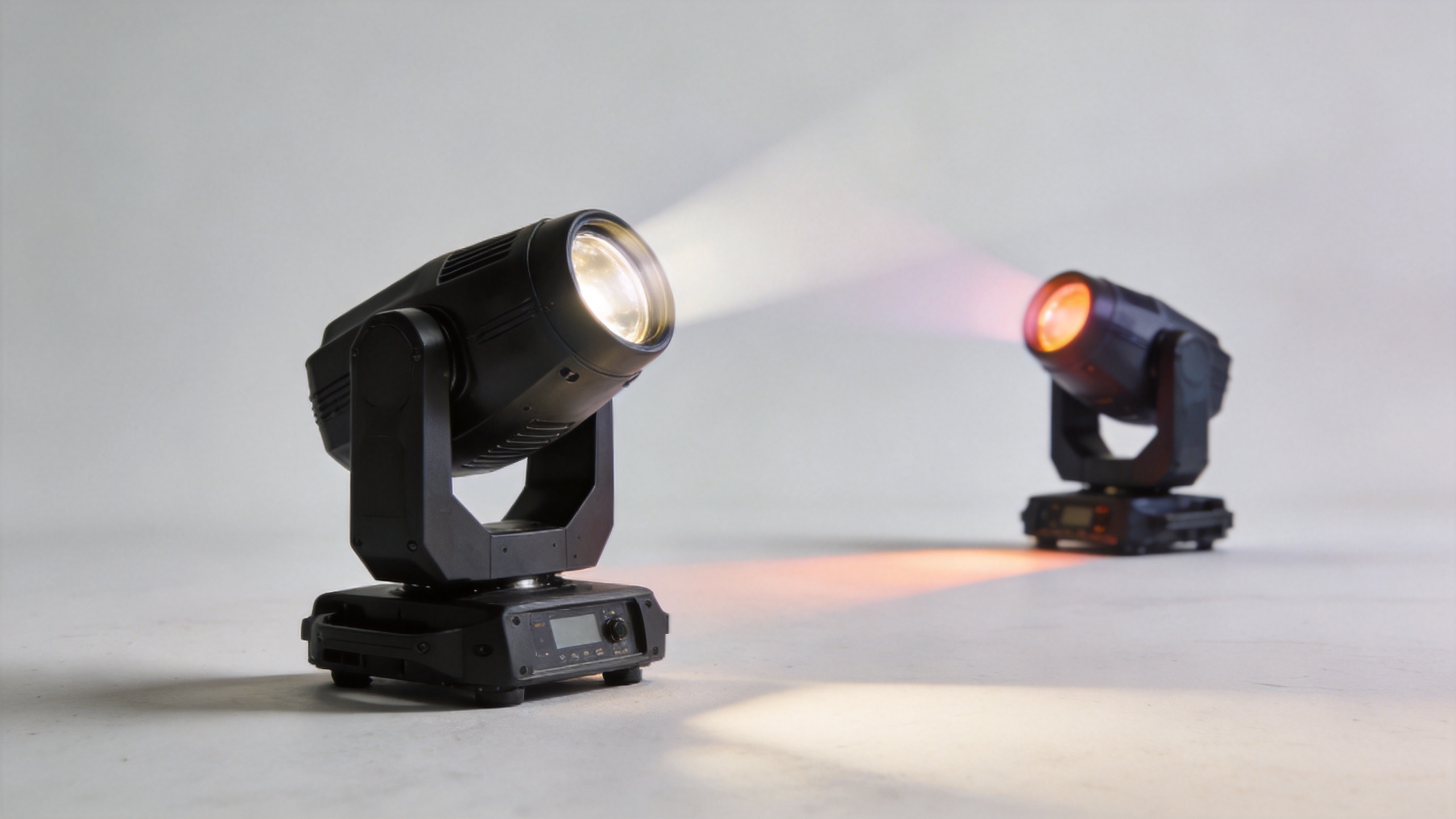
A moving head is a motorized stage-lighting fixture that can aim its output in different directions while changing the look of the light. Instead of treating a lamp as a fixed point, lighting teams can use a moving head to sweep a beam across a room, frame a performer, trace a ceiling, or change the mood between cues. That flexibility is why moving heads appear in live shows, clubs, weddings, touring rigs, and rental inventories.
The simple definition is useful, but it leaves out the interesting part: a moving head combines motion, optical effects, color, dimming, and control into one fixture. The exact feature set varies by model, so a practical plan starts with the required visual result rather than a long feature checklist.
How a Moving Head Creates Motion
The head of the fixture is driven by motors. Pan moves it horizontally, while tilt moves it vertically. A lighting console or controller sends positions and timing cues, allowing the fixture to move from one target to another during a show. Smooth movement depends on the fixture, its selected control mode, programming, rigging position, and the speed demanded by the cue.
For example, a pair of moving DJ lights can slowly cross over a dance floor during an entrance, then switch to faster, synchronized movement for a musical peak. In a live event, the same principle can be used more subtly: a moving head may follow a stage zone, reveal scenic texture, or create a changing aerial composition above the audience.
Motion is not only about speed. Direction, spacing, fade time, and symmetry all affect whether the result feels calm, energetic, precise, or chaotic. Before programming, it helps to decide what the audience should notice: the performer, the architecture, the beam itself, or the rhythm of the show.
What Effects Can a Moving Head Produce?
A moving head can combine several types of effects. Some are mechanical or optical features inside the fixture; others are created through programming and placement. Common possibilities include:
- Beam effects: narrow, defined shafts that can cut through haze and create aerial lines.
- Spot effects: focused pools of light for highlighting a performer, object, or part of a stage.
- Wash effects: broader, softer coverage for color and atmosphere across a larger area.
- Color changes: color wheels or color-mixing systems can transition the visual mood between cues.
- Gobo effects: patterned inserts can project texture, shapes, breakup patterns, or graphic movement onto a floor, wall, or scenic surface when the fixture supports them.
- Focus, zoom, prism, and frost effects: availability varies by model, but these tools can alter edge sharpness, beam width, multiplication, or diffusion.
- Dimming and strobe effects: intensity control can support fades, punchy accents, and rhythmic flashes when used appropriately.
Not every moving head includes every feature. A beam-oriented fixture may prioritize tight aerial output, while a wash-oriented fixture may prioritize broad color coverage. Hybrid models can combine multiple roles, but the practical result still depends on the chosen operating mode and the venue.
Why Haze, Venue Size, and Placement Matter
The same programmed cue can look very different from one venue to another. A beam is usually easiest to see when there is a suitable amount of atmospheric haze, but haze use must follow the venue’s rules and the event’s safety requirements. Without it, the audience may still see the point of light or projected pattern, yet not the full aerial path.
Placement matters as much as the fixture’s feature list. A moving head mounted too low can create distracting glare; one placed too far from the intended surface may not deliver the desired pattern scale. For a wedding, subtle color and slow movement may support the room without drawing attention away from the couple. For a club or concert, tightly timed dj moving heads can contribute to a more kinetic visual language.
A useful pre-show check is to confirm the throw distance, hanging or floor position, control method, sightlines, desired effect density, and any limits on haze or strobing. More fixtures do not automatically create a better look. Often, a clearer visual goal and deliberate cue timing create a stronger result.
How Are Moving Heads Controlled?
Most professional moving-head systems are controlled through DMX-based lighting systems. Depending on the fixture and selected mode, individual channels may address pan, tilt, intensity, color, gobo selection, focus, zoom, or other functions. The exact channel map is model-specific, so operators should use the current manual and test the selected personality before show day.
Some fixtures also offer automatic programs, sound-active modes, master/slave operation, or simplified control options. These can be useful for smaller setups, but a dedicated controller gives a team more control over timing, repeatability, and coordination with the rest of the rig. In either case, planning should include cable routing, addressing, power distribution, and a safe test sequence.
Typical Applications for Moving Head Lighting
Moving heads are adaptable because motion and optics can be reprogrammed for different scenes. Common uses include:
- Concerts and live shows: beam sweeps, performer accents, scenic texture, and cue-by-cue transitions.
- Bars, clubs, and DJ events: rhythmic movement, color changes, and aerial patterns that respond to the energy of the program.
- Weddings and banquets: softer wash looks, first-dance accents, ceiling movement, and room transformation between program moments.
- Rental and production inventories: flexible fixtures that can be adapted to many venue sizes and event styles after proper testing.
For projects that need a beam, spot, and wash discussion in one fixture category, you can review the AICPOSE 500W CMY CTO BSW 3in1 Moving light. Confirm the current specification, operating mode, power requirements, and site conditions before making it part of a design.
Choosing the Right Moving Head for the Intended Effect
Start with the effect, then narrow the fixture category. Do you need narrow visible beams, textured projections, broad color coverage, or a combination? Next, consider venue dimensions, mounting points, the control system, ambient light, required operating hours, transport needs, and the experience level of the operators.
It is also worth separating must-have functions from nice-to-have functions. If you need crisp projected patterns, focus and gobo capability may matter more than a very wide wash. If the goal is to color a room and make gentle movement, a wash-focused option may be more relevant. When in doubt, test the proposed fixture in conditions that resemble the actual site.
Final Takeaway
A moving head is more than a light that moves. It is a programmable stage tool that can combine pan and tilt motion with beam, spot, wash, color, gobo, dimming, and other effects. The strongest results come from matching the fixture’s capabilities to the visual goal, the control plan, and the physical venue. Begin with a clear cue concept, verify the exact fixture functions, and test the look under real event conditions.