 EN
EN



What Is Professional Stage Lighting and How Does It Support Live Events
Professional stage lighting is the planned use of fixtures, control, placement, and cues to make a live event visible, readable, and emotionally coherent. For concert promoters, production teams, rental companies, and venue operators, stage concert lights are not simply bright lamps above a platform. They are a coordinated visual system that helps audiences follow performers, understand the atmosphere of a scene, and experience changes in music or program flow.
From an operator’s viewpoint, the useful question is not “How many fixtures can we add?” but “What visual result must the room deliver at each moment?” A small club, a touring concert stage, an outdoor festival, and a corporate launch all place different demands on stage concert lights. Distance, ambient light, sightlines, rigging positions, video content, and the speed of cue changes all influence the plan.
Professional stage lighting is a system, not a single fixture
At its core, a professional stage concert lights system combines several layers of work. Fixtures create the light; truss, stands, or architectural positions place it; a console and control network coordinate it; and a cue plan turns it into a repeatable show. The goal is to make the visible result intentional rather than accidental.
A practical design for stage concert lights usually works across five connected objectives: visibility, revelation of form, composition, mood, and information. Visibility helps an audience see performers and key action. Revelation of form uses direction and shadow to avoid a flat-looking stage. Composition guides attention within the whole frame. Mood supports the energy or tone of the event. Information can signal a transition, a speaker change, a musical peak, or the beginning of a new section.
This is why stage concert lights must be considered together. A front-light position may improve facial visibility, while backlight separates performers from the background. A wash can establish a broad color field, and a moving beam can create a focused visual accent. None of these roles automatically replaces the others.
The fixture roles behind a live-event lighting plan
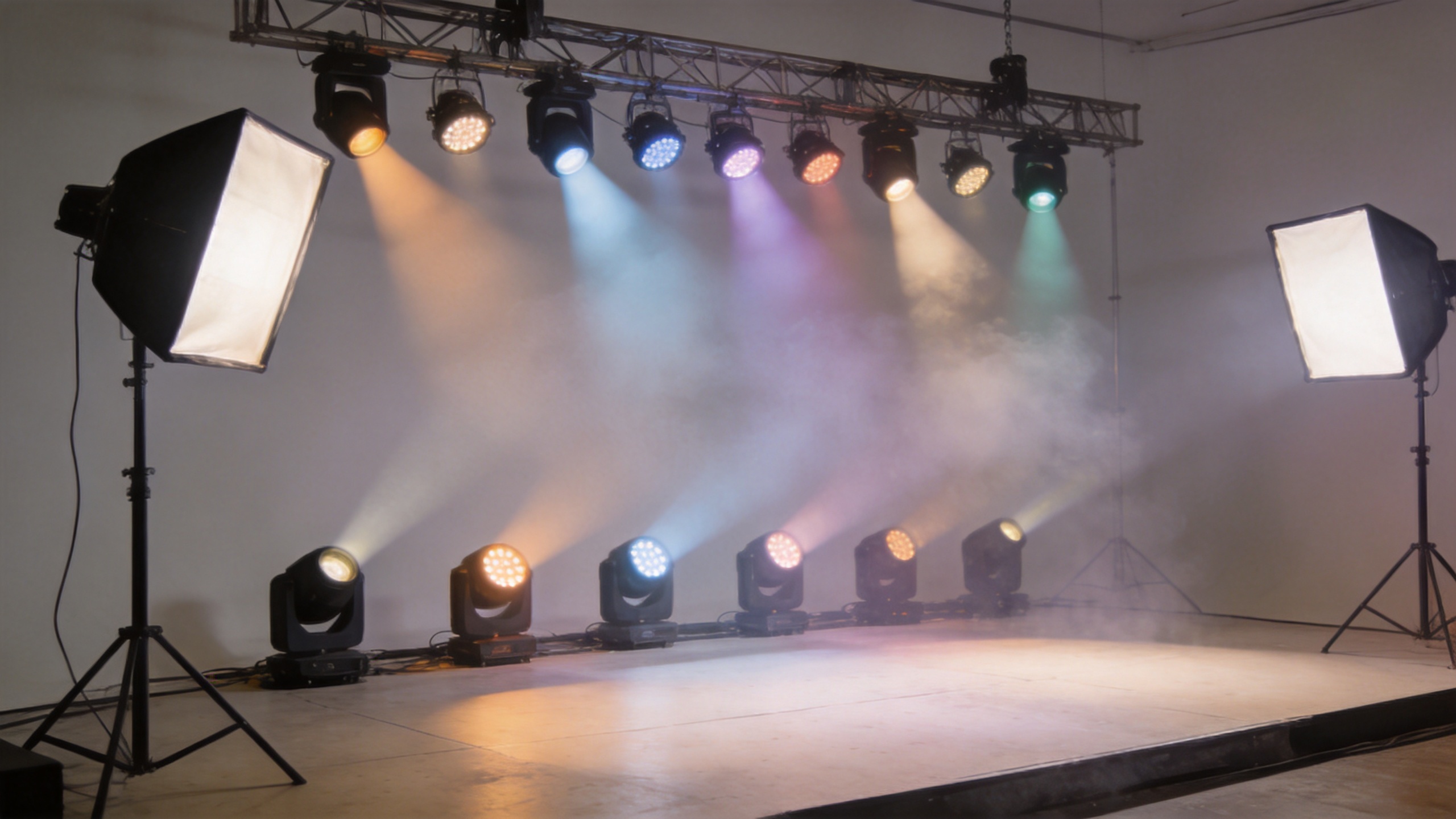
Professional stage concert lights systems often combine fixture categories because each has a different job. LED wash fixtures provide broad color coverage for a stage, backdrop, or architectural surface. Profile or ellipsoidal-style fixtures can help shape more controlled areas of light. Moving-head fixtures add repositionable beams, patterns, and movement when the event needs dynamic changes. PAR-style fixtures remain useful where a straightforward wash or color contribution is needed.
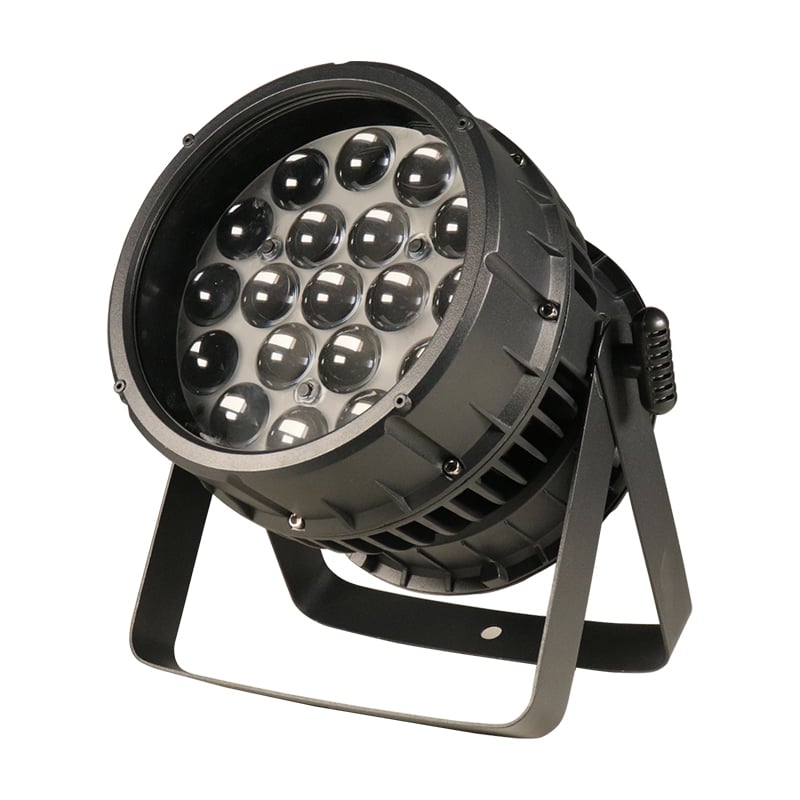
For outdoor or weather-exposed event zones, the environmental suitability of each fixture should be verified against current documentation before it is specified. For example, teams planning an outdoor wash role can review the AICPOSE IP65 19×15W Zoom PAR Light as a product-category reference, then confirm its current documentation, installation requirements, and fit for the actual venue.
The choice is less about declaring one fixture type universally suitable and more about matching roles. If the show needs a broad field of color, the wash role comes first. If it needs narrow, visible accents through haze, a beam-oriented role may be relevant. If the event relies on performers being clearly seen, key-light positions must be planned before decorative effects.
How stage concert lights support the audience experience
Well-planned stage concert lights influence what an audience notices and when. During a vocal section, controlled front light can prioritize facial visibility. During an instrumental build, color and movement may widen the visual frame. During a speaker transition, a clean shift in intensity or focus can guide attention without needing an announcement.
Ambient light changes the perceived strength of an effect, especially in daylight, glass-heavy spaces, or venues with bright LED walls. Likewise, a fixture position that looks convincing in a rendering may not work once sightlines, camera angles, scenic elements, and audience seating are considered. Professional planning therefore treats a lighting look as a relationship between fixtures, room conditions, and the people who will see it.
That relationship also matters for inclusivity and comfort. Excessive glare, poorly aimed fixtures, or fast effects in the wrong context can distract from the program. A lighting plan should support the event’s purpose first, whether that purpose is performance, presentation, celebration, or brand communication.
Control and cue coordination make the system repeatable
Stage concert lights become operationally useful when the team can control them consistently. DMX512 is a digital communication standard commonly used to control lighting and effects networks. In practical terms, it gives the console a way to send coordinated instructions to compatible dimmers and intelligent fixtures.
For an event crew, this matters because the show is rarely a single static look. Stage concert lights may need to fade for an entrance, change color with a song section, isolate a presenter, or reset between acts. Cue programming lets a team organize those changes in advance, while live operators can adapt to real conditions where appropriate.
Before committing to a control approach, clarify the cue-change frequency, the number of fixture types, the expected operating roles, and the available setup time. More features do not automatically make a workflow simpler; the crew also needs enough time to label, test, and rehearse the system.
What to coordinate before an event
A reliable stage concert lights plan starts before fixtures are hung. Ask the venue and production team the following questions:
- What must the audience see clearly: faces, instruments, scenery, products, or screens?
- What is the throw distance from each potential fixture position to the intended target?
- Which areas need a broad wash, and which moments need focused accents?
- How will ambient light, LED screens, haze, or camera coverage affect the result?
- How many cue changes are expected, and who will program and operate them?
- Which rigging, power, data, weather, and safety conditions need on-site confirmation?
These questions are often more valuable than beginning with a parameter list. When the event objective is clear, stage concert lights can be assigned purposeful roles instead of being added only for visual quantity.
Why rehearsal and on-site checks still matter
Even a sound stage concert lights concept needs real-world verification. During setup, check audience sightlines before finalizing beam targets, then review whether performer visibility remains clear when color, movement, and screen content are active. Observe the frequency of cue changes to confirm that the programmed workflow suits the show pace.
It is also helpful to separate confirmed information from items that require final verification. Public specifications can inform planning, but final compatibility depends on the current product documentation, venue conditions, installation method, local requirements, and the production team’s operating plan. The same model can create different results under different mounting and control conditions.
Conclusion: use lighting to serve the live moment
Professional stage lighting supports live events by combining visibility, visual focus, atmosphere, and cue-based communication. For stage concert lights, that combination is what turns individual fixtures into a useful event system. The most effective stage concert lights are selected and positioned around the event’s actual needs—not around a universal fixture hierarchy. Begin with the venue, the audience, and the visual objective; then align fixture roles, control, rehearsal, and verification around that plan.
For teams exploring outdoor or wash-lighting applications, use current product information and a clear site brief to start a fit-based conversation. The result should be a lighting system that helps the audience stay connected to what matters on stage.