
 EN
EN


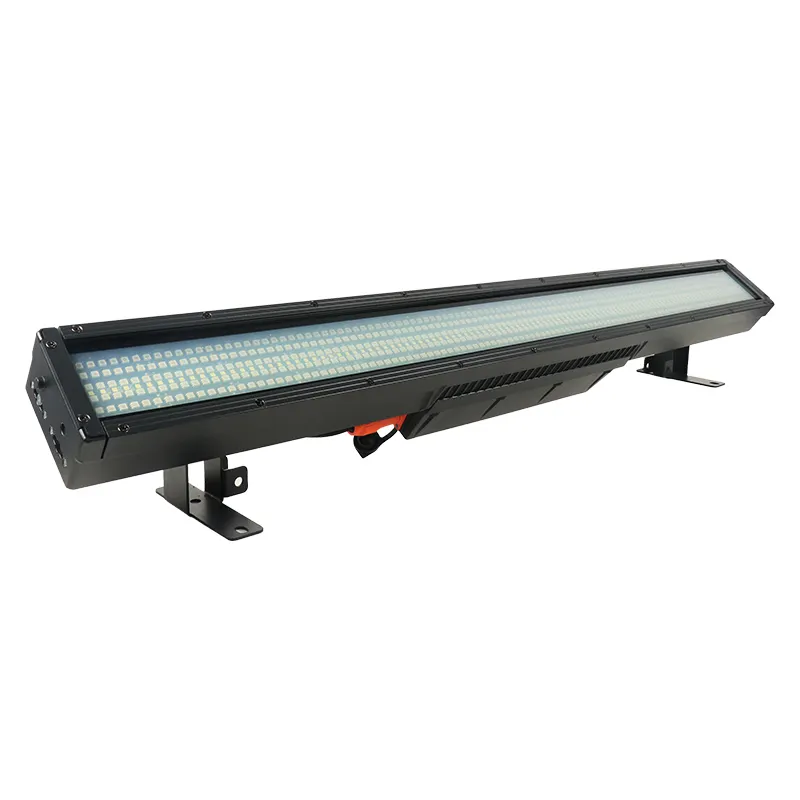
Modern productions no longer treat lighting, video, and audio as separate departments that meet only at rehearsal. In most venues and touring environments, stage lighting systems are now expected to exchange timing, cue, and control data with media servers, LED processors, digital consoles, and show control platforms. The core integration goal is simple: every visual and sonic moment should feel intentional, synchronized, and repeatable. When stage lighting systems are designed with interoperability in mind, transitions become cleaner, operator workload drops, and creative teams can execute complex scenes with confidence.
To understand how integration works in practice, it helps to look at architecture, protocol layers, timing methods, and operational workflow rather than just fixtures and consoles. Stage lighting systems typically sit at the intersection of DMX distribution, Ethernet networking, and time-based cue execution, which makes them a natural coordination hub for video and audio technologies. The strongest results come from planning shared clocks, shared cue logic, and shared fault-tolerance across all technical domains. That is why stage lighting systems are increasingly specified as part of a unified production network, not as an isolated subsystem.
Integration Architecture Across Lighting, Video, and Audio
Shared control topology in real production environments
In integrated shows, stage lighting systems connect to a broader control topology that includes lighting consoles, media servers, playback engines, and digital audio workstations. Instead of each team running independent timing decisions, cues are often triggered from a master timeline or show control layer. This architecture reduces mismatch between lighting hits, video content changes, and audio accents. It also gives operators a common reference point during rehearsals and live execution.
A practical topology usually combines DMX output for fixtures with Ethernet-based transport for control messages, synchronization, and monitoring. Stage lighting systems still rely on stable fixture-level control, but integration requires that these systems also speak fluently with networked devices. For that reason, many engineers separate control VLANs, prioritize real-time packets, and define fallback paths before opening night. The result is predictable behavior even under high cue density.
Signal flow design and operational boundaries
Clear signal flow is essential when stage lighting systems integrate with video switchers and audio consoles. Lighting commands should have explicit source priority, while triggers from video or audio should be governed by defined permissions to prevent accidental override. Without boundaries, one subsystem can unintentionally disrupt another during troubleshooting or last-minute edits. Good design documents not only where data moves, but also who is allowed to move it.
Many teams create integration maps that show universes, IP ranges, sync sources, and cue authority. This makes stage lighting systems easier to debug when timing slips or content fails to load. During changeovers, these maps also reduce downtime because replacement operators can understand the architecture quickly. Integration success is rarely about one device; it is about disciplined system thinking across departments.
Protocol Layers That Enable Cross-Technology Communication
DMX, Art-Net, and network distribution fundamentals
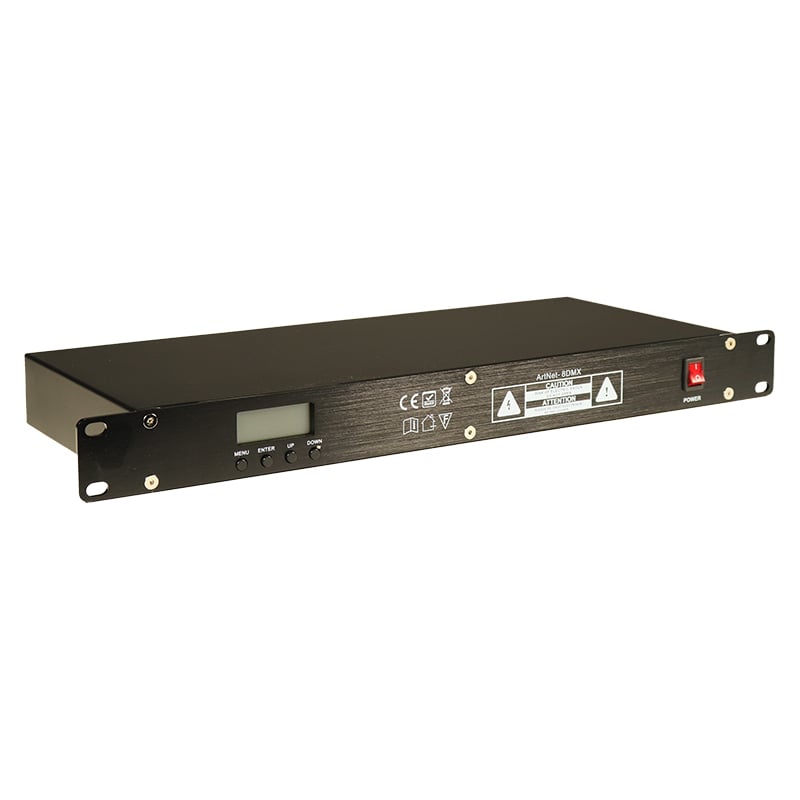
At fixture level, stage lighting systems still depend on DMX for deterministic channel control, but integration with video and audio expands this foundation through Ethernet protocols. Art-Net and similar transports allow control data to move across standard network infrastructure, bridging physical lighting outputs with centralized show logic. This is where distribution hardware becomes critical, especially when long cable runs and multiple universes are involved. Reliable stage lighting systems use clean data segmentation and buffering to protect fixture response.
When a production scales, engineers often deploy nodes, splitters, and boosters to stabilize signal quality while maintaining network flexibility. A device such as an stage lighting systems interface point can help bridge DMX branches and Art-Net distribution in mixed environments. The key is not the hardware label but the function: isolate faults, preserve timing integrity, and simplify routing. Stage lighting systems that include this layer are better prepared for high-output video walls and tightly timed audio cues.
MIDI, OSC, and trigger messaging between departments
Beyond fixture data, stage lighting systems integrate through control messaging protocols such as MIDI and OSC, depending on the production platform. MIDI remains common for cue triggers and transport commands, while OSC is often used for richer parameter exchange over IP networks. In both cases, consistency matters more than protocol preference. Teams must agree on message naming, value ranges, and trigger ownership.
For example, an audio timeline may emit markers that trigger lighting chases and video layer changes at exact song positions. Stage lighting systems receive these triggers, execute prebuilt looks, and confirm status to operators in real time. This reduces manual button timing and improves repeatability from show to show. When message design is standardized early, technical rehearsals move faster and fewer integration errors reach live performance.
Synchronization Methods for Frame-Accurate Results
Timecode strategy and cue alignment
The most visible sign of mature integration is precise synchronization. Stage lighting systems commonly align with video and audio through SMPTE or related timecode references, allowing cues to execute at exact timeline locations. This approach is especially important in productions where visual edits, lyric moments, and dynamic lighting must land together. Manual triggering can work for simple events, but timecode improves consistency under pressure.
A strong timecode strategy includes frame rate agreement, distribution redundancy, and clear behavior during code dropouts. Stage lighting systems should define whether they hold last look, jump to safe state, or await re-lock when sync is lost. These decisions affect audience perception and safety, not just aesthetics. Integrated teams rehearse failure scenarios so recovery is immediate and controlled.
Latency management and cross-system compensation
Even when all systems are synchronized, processing latency can still shift perceived timing. LED processing, audio buffering, and network hops each add delay, and stage lighting systems must account for these offsets. Engineers typically measure end-to-end latency and apply compensation values at cue or device level. Without this step, the show can feel slightly disconnected even if clocks match.
Practical compensation often includes advancing lighting cues by small frame increments or delaying control events to match slower subsystems. Stage lighting systems benefit from repeatable test scenes that reveal drift across songs or acts. Once offsets are validated, they should be version-controlled with show files to prevent regression during updates. Integration quality depends on disciplined timing calibration, not assumptions.
Implementation Workflow From Design to Live Operation
Preproduction planning and interoperability testing
Integration starts long before load-in. Teams that succeed with stage lighting systems define cue philosophy, network plan, and control priorities during preproduction, then test interoperability in a staging environment. Early testing exposes protocol conflicts, naming mismatches, and bandwidth limits while there is still time to adjust. This prevents rushed fixes during technical rehearsals.
A practical preproduction package includes patched universes, IP schema, trigger maps, and fallback macros shared across departments. Stage lighting systems should be validated against representative video content and full audio session loads, not minimal test files. Realistic testing reveals burst conditions that simple bench checks miss. The more complete the preproduction simulation, the more stable the live result.
Show-day operations, monitoring, and fault recovery
During live operation, integrated stage lighting systems depend on active monitoring and disciplined communication. Operators watch cue status, network health, and sync lock indicators while following agreed call language with video and audio teams. This reduces hesitation when cues need to be held, skipped, or retriggered. Fast, clear coordination protects show continuity.
Fault recovery plans should be rehearsed and role-based, not improvised. If one node fails, stage lighting systems must have known reroute paths and preserved cue logic so visual continuity remains acceptable. If timecode drops, operators should know exactly when to switch to manual mode and how to rejoin timeline control. Integrated reliability is measured by graceful degradation, not by absence of problems.
FAQ
Can stage lighting systems integrate with both legacy and modern AV infrastructure?
Yes, stage lighting systems can bridge legacy DMX workflows and modern IP-based AV networks when the architecture is planned correctly. Integration usually relies on protocol conversion, clean signal distribution, and clearly defined control ownership. The key is to test mixed environments under realistic load so timing and reliability are verified before deployment. Legacy compatibility is achievable, but it should be engineered rather than assumed.
What is the biggest risk when connecting stage lighting systems to video and audio networks?
The biggest risk is unclear system authority combined with unmanaged timing dependencies. When stage lighting systems receive triggers from multiple sources without priority rules, cue conflicts and missed moments become likely. Network congestion and latency drift can worsen this if traffic classes are not controlled. A documented control model and sync plan is the most effective risk reduction measure.
How much synchronization precision is realistic for integrated live shows?
Well-designed stage lighting systems can achieve highly consistent cue alignment that feels frame-accurate to audiences across repeated performances. Exact tolerance depends on media processing paths, clock stability, and operator workflow discipline. Most professional productions prioritize perceptual sync quality supported by measured latency compensation. Precision is a systems outcome, not a single-device feature.
Do smaller venues benefit from integrated stage lighting systems, or is this only for large productions?
Smaller venues benefit significantly because integration simplifies operation and improves repeatability with limited staff. Stage lighting systems tied to video and audio cues reduce manual timing pressure and create more polished results with fewer operators. Even basic synchronization and shared trigger logic can improve consistency from event to event. Scaled integration is often more about workflow maturity than venue size.
Table of Contents
- Integration Architecture Across Lighting, Video, and Audio
- Protocol Layers That Enable Cross-Technology Communication
- Synchronization Methods for Frame-Accurate Results
- Implementation Workflow From Design to Live Operation
-
FAQ
- Can stage lighting systems integrate with both legacy and modern AV infrastructure?
- What is the biggest risk when connecting stage lighting systems to video and audio networks?
- How much synchronization precision is realistic for integrated live shows?
- Do smaller venues benefit from integrated stage lighting systems, or is this only for large productions?